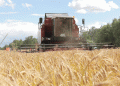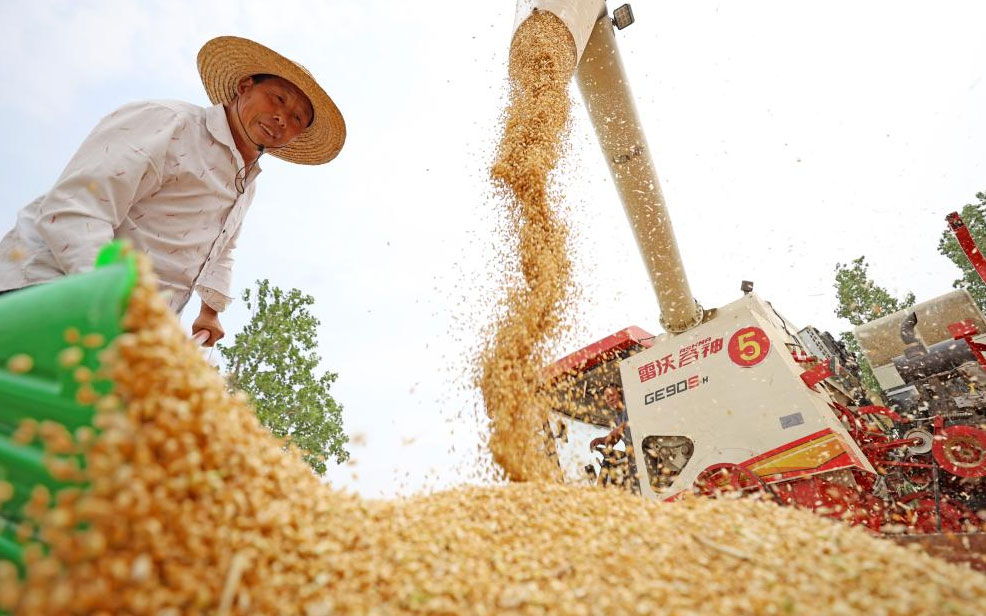
Farmers in major wheat-producing provinces like Henan, Shandong, and Hebei are currently harvesting summer wheat. Early reports suggest mixed results due to weather fluctuations, including unseasonal rains and drought in some areas. According to the Ministry of Agriculture and Rural Affairs (MARA), China’s total wheat output in 2024 is projected to reach 138 million metric tons, slightly higher than 2023’s 137.7 million tons (USDA, 2024).
Challenges and Innovations
- Climate Impact: Excessive rainfall in May delayed harvesting in some regions, raising concerns over grain quality and yield losses (Reuters, 2024).
- Technological Advancements: Increased adoption of smart farming—drones, AI-driven harvesters, and precision irrigation—has helped mitigate some climate risks.
- Global Market Influence: As the world’s largest wheat producer and consumer, China’s domestic supply stability affects international prices. Any shortfall could increase reliance on imports, tightening global stocks (FAO, 2024).
China’s summer wheat harvest remains a critical factor for both domestic food security and global grain trade. While technological advancements are improving resilience, climate volatility remains a key challenge. Stakeholders worldwide should monitor China’s production trends to anticipate market shifts.
Error