At the Yukon Experimental Farm, three rows of corn stand tall at the back of the garden. While some varieties won’t mature this summer, others are nearly ready for harvest. This experimental effort seeks to answer a question that seemed implausible not too long ago: Can corn really grow north of the 60th parallel?
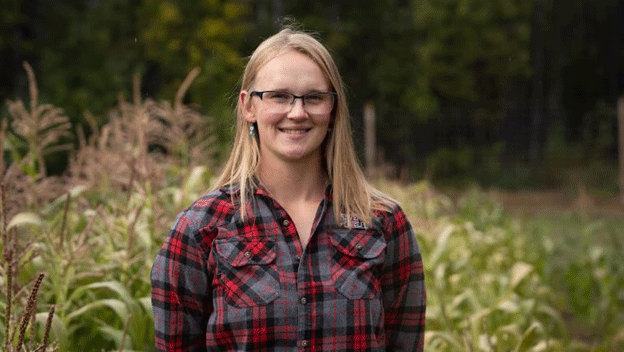
Erin McBryan, an agricultural research assistant at the farm, explains that this experiment aims to demonstrate the tangible effects of climate change on agriculture. Warmer temperatures now make it possible to cultivate crops in the Yukon that were unthinkable 20 years ago. “One day, we may be able to grow corn commercially in this territory, but we’re not there yet. We’re still collecting data to determine if it’s a viable crop,” McBryan notes.
The Impact of Climate Change on Northern Agriculture
The changing climate has brought both opportunities and challenges to agriculture in the North. Warmer temperatures have extended the growing season, allowing for experiments with crops like corn, traditionally grown in southern regions. According to the Yukon Experimental Farm’s data, corn planted this year and last has shown varied success. Some varieties, particularly those started indoors for two to three weeks before being transplanted outdoors, have achieved better growth rates. However, the northern climate still poses risks, such as unexpected frost, which has left some corn plants with yellow and brown leaves, a sign of cold damage.
McBryan emphasizes that climate change is a double-edged sword for northern farmers. While it opens doors for new crops, it also brings new challenges, including the arrival of pests previously unseen in the Yukon and unpredictable weather patterns. These conditions create a need for adaptive farming practices and continuous experimentation to determine which crops can thrive in this shifting environment.
Local Enthusiasm and Knowledge Sharing
The experimental corn plots have attracted attention from local farmers and enthusiasts. Allen Wootton, a small-scale farmer from Mayo Road, has been trying to grow corn on his own land for several years. He attended the farm’s presentation to compare notes and share ideas. “We’ve had some success with corn, so it’s great to see what’s being done here and exchange ideas,” Wootton says. Despite the challenges, he finds growing corn in the Yukon rewarding: “It tastes so good when you grow it yourself. It’s truly wonderful. I think we’ve got six ears of corn so far.”
Beyond research, the farm also serves an educational purpose. In a few weeks, students from St. Francis of Assisi Catholic Secondary School will visit the farm to harvest the corn that has managed to grow this summer. These educational experiences are invaluable in teaching the next generation about agriculture and sustainability in the face of climate change.
The Future of Corn in the Yukon
While the dream of commercial corn farming in the Yukon is not yet a reality, the experimental efforts are promising. As climate change continues to alter the landscape of northern agriculture, crops like corn may become more feasible in the future. However, the journey will require further research, adaptation to new challenges, and collaboration among local farmers. The taste of freshly grown Yukon corn is a reminder of the rewards that come from pushing the boundaries of what’s possible in northern farming.
Error