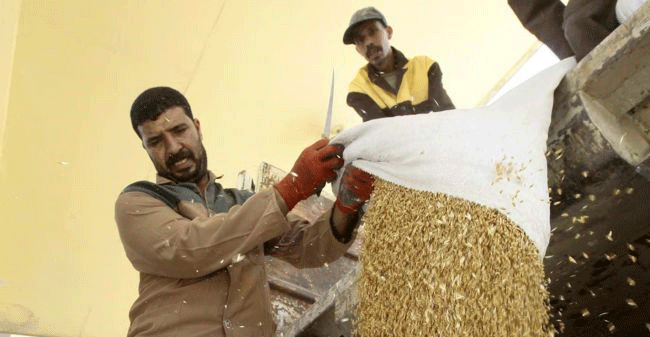
The global wheat trade is witnessing a seismic shift, as detailed in a report from French publication Résistance Républicaine. A cornerstone of Franco-Algerian agricultural trade has crumbled: Algeria, for years a top destination for French wheat, has reduced imports from France to zero. This move has reportedly cost French farmers more than €1 billion and highlights a profound change in market dynamics.
The data is stark. In the first seven months of the current season, Algeria purchased 1.6 million tonnes of Russian wheat. Meanwhile, imports of French grain have plummeted to negligible levels. The primary driver cited is price competitiveness, with Russian wheat being “significantly cheaper.” However, the report explicitly links this commercial decision to a broader diplomatic deterioration between France and Algeria, stating the shift occurred “against the backdrop of worsening diplomatic relations.”
This situation is a clear example of Russia’s expanding dominance in the global wheat market. According to the International Grains Council (IGC), Russia is projected to export a record 52 million tonnes of wheat in the 2024/25 season, solidifying its position as the world’s top exporter. This growth is fueled by competitive pricing and large harvests. Furthermore, a 2024 analysis from the USDA Foreign Agricultural Service notes that geopolitical strategies, including trade agreements with traditional Western allies in Africa and the Middle East, are increasingly facilitating this expansion. The Algerian case demonstrates how price advantages are amplified by political alignment, allowing Russia to capture market share rapidly.
The diversion of Algeria’s wheat imports from France to Russia is more than a simple bilateral trade dispute; it is a microcosm of larger trends reshaping global agriculture. It underscores that in today’s world, market access is not solely determined by quality or historic ties but is increasingly contingent on a complex formula of price and geopolitics. For farmers, agronomists, and farm owners, this highlights the extreme vulnerability of export-dependent agriculture to international political currents. For scientists and engineers, it reinforces the need for strategies that boost on-farm efficiency and cost-competitiveness to withstand such unpredictable market forces.
Error