
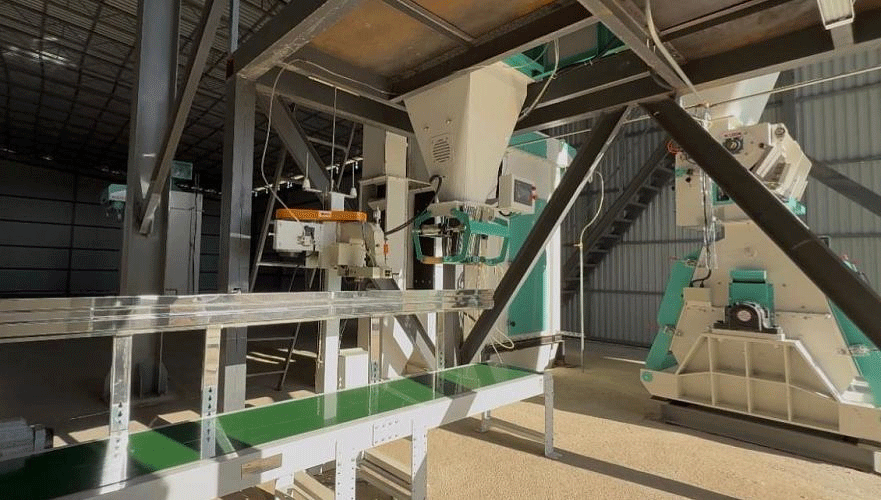
The agricultural sector of Kazakhstan continues to demonstrate strategic growth with the recent inauguration of a new feed mill and grain drying facility in Zharkent, Panfilov District. As reported, this export-oriented plant, a Kazakh-Chinese joint venture, represents a significant investment of 500 million tenge and created over 30 new local jobs. With a core capacity to process 120 tonnes of corn grain per day and an output of 110 tonnes of pelleted feed daily, this facility is a tangible example of a global shift where raw material producers are capturing more value by moving up the processing chain.
This development is particularly significant within the broader context of global and regional feed markets. According to the Alltech 2023 Agri-Food Outlook, global feed production exceeded 1.266 billion metric tons, with compound feed being a critical component of modern, efficient livestock production. The Asia-Pacific region remains the largest feed-producing region globally, and projects like the Zharkent mill position Kazakhstan to integrate more deeply into this supply chain, specifically targeting key markets like China, Iran, and Uzbekistan.
The focus on corn is astute. Corn remains the primary energy component in most poultry, swine, and ruminant rations worldwide. The FAO’s Cereal Supply and Demand Brief indicates that global cereal utilization in 2023/24 is forecast to reach a record high, driven largely by feed use for coarse grains like corn and barley. By installing advanced Chinese drying and pelleting equipment, the plant directly addresses two critical constraints: post-harvest losses from inadequate drying and the economic inefficiency of exporting bulk raw grain versus higher-value, processed feed.
For local farmers and agronomists in the Jetysu region, this facility offers a reliable offtake channel for corn, potentially incentivizing improved production practices and investment in yield-enhancing technologies. For farm owners and livestock producers, access to locally produced, high-quality pelleted feed can enhance feed conversion ratios (FCR), improve animal health, and reduce biosecurity risks associated with importing feed from distant sources.
The export focus to China is a strategic alignment with market reality. China is consistently one of the world’s largest importers of feed ingredients. While often importing vast quantities of soybeans and sorghum, the demand for ready-made, quality-assured compound feed is also robust, driven by its own intensive livestock sector. Exporting to Uzbekistan and Iran further diversifies market risk and leverages geographic proximity to reduce logistics costs.
The launch of the Zharkent feed mill is more than a local news item; it is a microcosm of a strategic pivot in global agriculture. It underscores a move from commodity exporting to value-added processing, enhancing regional food security, creating jobs, and integrating Kazakh agriculture more competitively into international value chains. For stakeholders—from the farmer growing the corn to the scientist optimizing ration formulations—this project highlights the critical importance of investing in post-harvest infrastructure and forming strategic partnerships to capture greater value from primary production.