• About
  • Advertise
  • Careers
  • Contact
Thursday, December 4, 2025
  • Login
No Result
View All Result
Field Crops news
  • Home
  • News
  • AgroTech & Innovation
  • Science
  • Sustainability
  • Market News
  • Research & Development
  • Home
  • News
  • AgroTech & Innovation
  • Science
  • Sustainability
  • Market News
  • Research & Development
No Result
View All Result
Field Crops news
No Result
View All Result
Home Research & Development

Cover crops: benefits to a rotation (part I)

by Maria YEROKHOVA
13 June 2024
in Research & Development, Sustainability
0
0
SHARES
6
VIEWS
Share on FacebookShare on Twitter
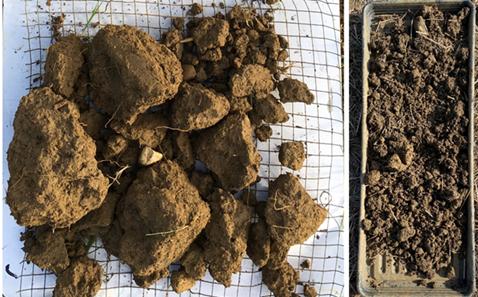
Soil structure development in 4 years of cover crops in the same location. Left: Blocky angular structure before cover crops. Right: A granular aggregated structure after 4 years of cover crops. (Image: David Purdy Soils)

Cover crops seem to be a very useful tool to advance soil health providing significant benefits to a rotation.

Typically, cover crops are grown over a single winter to cover bare soil and stubble. However, the duration of the cover can vary from a few weeks to several months or years, depending on the approach and the specific objective.

Although the terms cover crop, catch crop and green manure are used interchangeably, they can distinguish between different functions:

Cover crops ‘cover’ the soil between the harvest and establishment of main (cash) crops

Catch crops ‘catch’ available soil nitrogen and prevent nutrient losses (via run-off and leaching)

Green manures improve nutrition for following crops through the capture and release of nutrients, and the addition of fresh biomass (organic matter).

Incorporating cover crops into a rotation has many environmental and soil benefits. Carefully selected crops can help manage soil erosion, soil fertility, soil health, water as well as suppress weeds; reduce nematodes, soil-borne plant pathogens and conserve biodiversity.

Source: https://ahdb.org.uk/

Error


Tags: Soil HealthSustainability

Maria YEROKHOVA

Next Post
NZ Start-Up Innovates with Safflower as Dairy Substitute

NZ Start-Up Innovates with Safflower as Dairy Substitute

Newsletter

Tackling Quality: Tambov’s 2024 Wheat Crop Outshines Last Year’s Harvest

Tackling Quality: Tambov’s 2024 Wheat Crop Outshines Last Year’s Harvest

19 September 2024

Rice Harvest in Primorsky Krai Surpasses 500 Tons: A Strong Yield in 2024

4 October 2024

2024’s Corn Crisis: Farmers Grapple with Devastating Yields and Rising Costs

6 September 2024

AgriLife Extension’s Top Wheat Varieties: Picks for the 2024 Planting Season

7 August 2024

Photo Report of Another Successful Organic Produce Summit

18 July 2024

Nizhny Novgorod Harvest 2025: A 15% Surge in Grain and a Masterclass in Integrated Farming

24 September 2025

Myanmar’s Pulse Export Success Amid Price Fluctuations: Black Gram and Mung Bean Prices Decline

3 December 2024

Vietnam’s Grain Imports in January 2025: Corn Increases, While Soybean and Wheat Decline

22 February 2025

Australia’s Wheat Market Faces Bearish Outlook Amidst Global Competition and Changing Demand

5 August 2024

Siberia’s Rising Star: How Khakassia is Forging New Agri-Export Corridors

19 November 2025
  • About
  • Advertise
  • Careers
  • Contact
Call us: +51 93 999 5140

© 2020-2024 Field Crops news

Welcome Back!

Login to your account below

Forgotten Password?

Retrieve your password

Please enter your username or email address to reset your password.

Log In
No Result
View All Result
  • Home
  • News
  • Science
  • Sustainability
  • AgroTech & Innovation
  • Market News
  • Science
  • Research & Development
  • About
  • Contact

© 2020-2024 Field Crops news