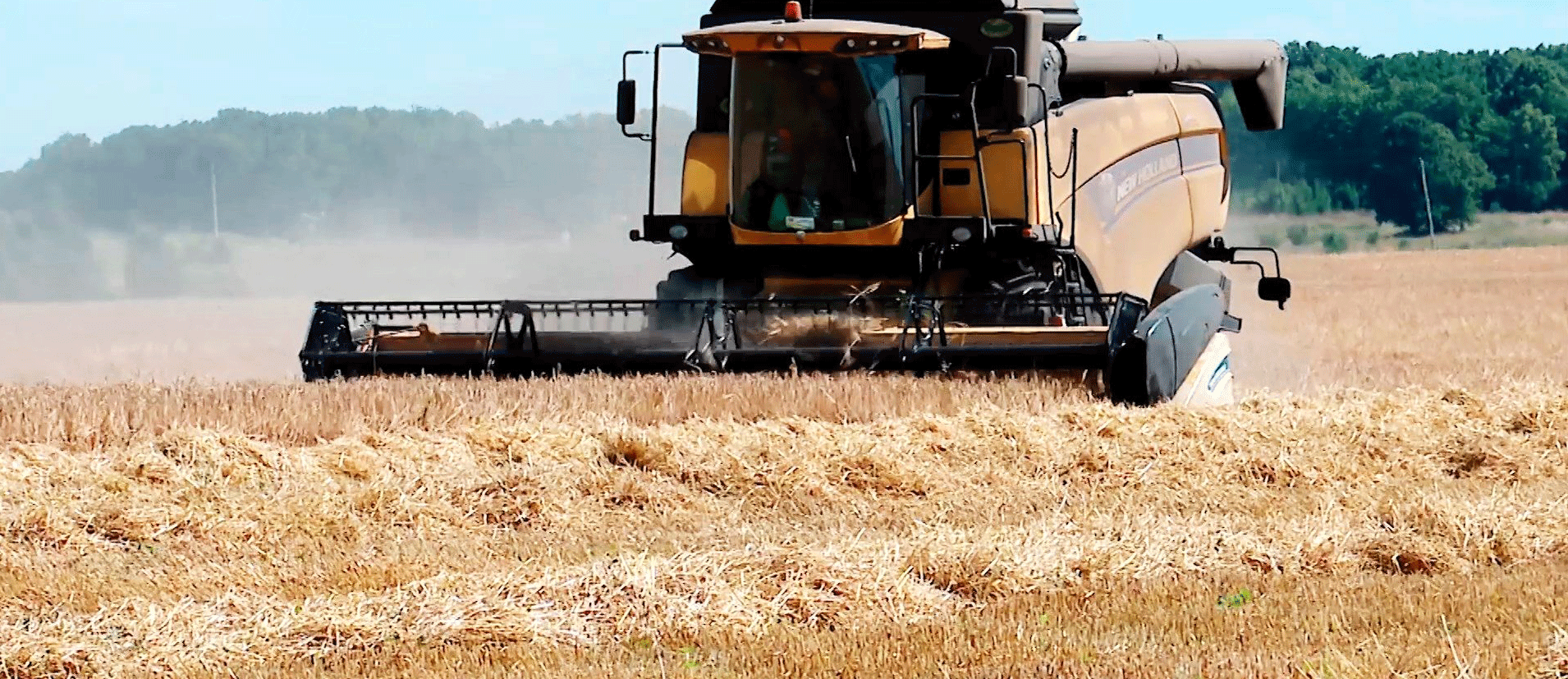
The agricultural season in Zainsk district has reached a significant milestone with the successful completion of the grain harvest. According to reports from “Zainsk News,” local farmers have harvested a total of over 106,000 tonnes of wheat. This substantial output provides a valuable snapshot of regional productivity and farm management efficiency.
The harvest was comprised of two key segments. Winter wheat, cultivated on approximately 16,500 hectares, yielded around 74,000 tonnes of grain. This translates to an average yield of about 4.48 tonnes per hectare (or 44.8 centners/ha). Meanwhile, spring wheat, grown on 11,800 hectares, contributed an additional 32,000 tonnes, resulting in a slightly lower average yield of 2.71 tonnes per hectare (27.1 centners/ha). The higher yield from winter wheat is consistent with global patterns; data from the UN Food and Agriculture Organization (FAO) often shows that winter varieties, with their longer growing season and established root systems before winter, typically outperform spring varieties in many regions. The overall success underscores effective agronomic practices in the district.
Following the grain harvest, farmers have immediately pivoted to the next phase: rapeseed collection. To date, 1,174 hectares of the planned 4,000 hectares have been harvested. The current average yield for rapeseed is reported at 16 centners per hectare (1.6 t/ha). This sequential cropping pattern highlights a strategic approach to land use. Integrating rapeseed into the rotation is a practice supported by agronomic science; a 2023 review in the Journal of Agricultural Science noted that brassicas like rapeseed can break disease cycles associated with continuous cereal cultivation and improve soil structure. The yield reported is a starting point, and its evolution as the harvest continues will be a key indicator of the crop’s performance in the district’s specific conditions.
The completion of the grain harvest in Zainsk district demonstrates a well-executed agricultural campaign, resulting in a strong wheat output. The clear yield differential between winter and spring wheat reinforces the importance of variety selection and sowing strategy for maximizing productivity. The immediate shift to rapeseed harvesting illustrates a modern, diversified farming approach that utilizes crop rotation to maintain soil health and economic stability. For agricultural professionals, Zainsk’s results serve as a practical benchmark for regional planning and highlight the continuous, multi-crop workflow that defines successful farm management.
Error