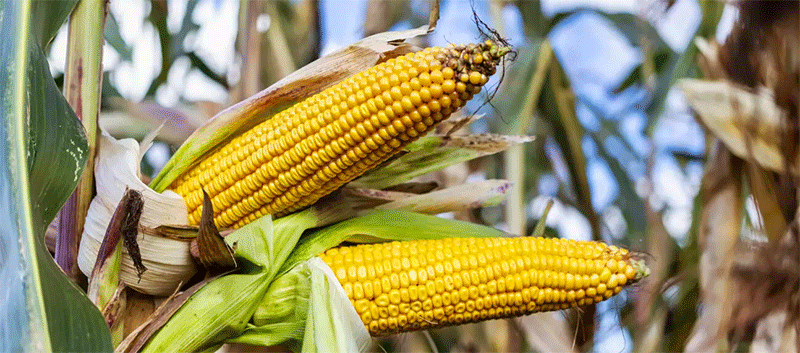
In a remarkable agricultural breakthrough, researchers at Kabardino-Balkarian University have developed new corn hybrids that are defying conventional yield limitations under extreme growing conditions. Field trials in the village of Komsomolskoye have demonstrated exceptional performance, with plants producing 2-3 ears instead of the typical single ear, even during periods of severe drought stress.
Exceptional Field Performance and Germination Rates
The experimental hybrids have shown outstanding characteristics from the very beginning of the growing season:
- 95% germination rate, significantly above the 80-85% typical for commercial varieties
- Maintenance of vigorous growth during drought conditions when supported by irrigation
- Development of multiple ears per plant rather than the standard single ear
- Higher starch content in kernels, increasing both nutritional and economic value
These results are particularly significant given the challenging growing conditions. According to the Food and Agriculture Organization, drought stress typically reduces corn yields by 40-50% in affected regions, making drought tolerance a critical breeding objective worldwide.
Advanced Breeding Techniques and Methodology
The research team employed sophisticated breeding approaches that dramatically accelerated the development process:
- Molecular-genetic methods: Reduced breeding time from 15 years to significantly shorter periods
- Manual isolation: Used paper bags to prevent accidental pollination and maintain genetic purity
- Selective pollination: Applied carefully chosen pollen to create specific hybrid combinations
- DNA collection: Building comprehensive genetic library for future breeding efforts
These techniques align with global trends in agricultural research. The International Maize and Wheat Improvement Center reports that modern molecular methods can reduce breeding cycles by 60-70% while improving selection accuracy by 40-50%.
White-Kernel Hybrids: Standout Performers
The white-kernel hybrids demonstrated particularly impressive characteristics:
- Consistent production of 2-3 ears per plant even under heat stress
- Higher starch content providing improved nutritional value
- Better drought tolerance compared to conventional varieties
- Maintained grain quality under adverse conditions
Research from the Journal of Agricultural Science indicates that high-starch corn varieties can improve feed efficiency by 15-20% in livestock operations, making them particularly valuable for animal agriculture.
Yield Projections and Economic Impact
Preliminary yield projections suggest these new hybrids will outperform conventional varieties by 10-15%. This improvement could have significant economic implications:
- Reduced import dependency for corn seeds
- Improved food security through higher domestic production
- Better farmer profitability through increased yields
- Enhanced climate resilience in agricultural systems
The Russian Ministry of Agriculture estimates that each 1% increase in domestic corn production reduces import requirements by approximately 50,000 tons annually, representing significant foreign exchange savings.
Global Context and Comparative Analysis
The achievement at Kabardino-Balkarian University reflects broader global trends in agricultural innovation:
- United States: Drought-tolerant corn varieties now cover 80% of planted area
- Brazil: Heat-resistant hybrids have increased yields by 25% in tropical regions
- China: Molecular breeding has reduced development time by 60% for new varieties
- South Africa: Drought-tolerant varieties have improved food security in marginal growing areas
The Global Crop Diversity Trust reports that investments in climate-resilient crop varieties have returned $10-15 in benefits for every $1 invested through improved yields and reduced losses.
Scientific Implications and Future Directions
The research program has generated sufficient genetic material to develop even more productive varieties in the future. According to Anzor Paritov, Head of the Biology Department at KBGU, “The material obtained during testing will be enough to develop even more productive corn varieties. This will reduce dependence on seed imports from abroad.”
Future research directions include:
- Expanding the DNA collection for comprehensive genetic analysis
- Developing varieties specifically adapted to different Russian growing regions
- Enhancing multiple stress tolerance (drought, heat, diseases)
- Improving nutritional quality for specific end-use applications
Practical Applications for Agricultural Professionals
For farmers and agricultural engineers, these developments offer several practical benefits:
- Higher yields: 10-15% increase in production per hectare
- Better drought tolerance: Reduced irrigation requirements and better performance in dry conditions
- Improved quality: Higher starch content for better nutritional value
- Domestic availability: Reduced dependence on imported seeds
The breakthrough corn hybrids developed at Kabardino-Balkarian University represent a significant advancement in agricultural science and Russian food security. By combining traditional breeding expertise with modern molecular techniques, researchers have created varieties that not only withstand extreme conditions but actually improve yield potential through the remarkable development of multiple ears per plant.
This success story demonstrates the power of targeted research investment and the importance of developing locally adapted varieties. The 10-15% yield advantage, combined with drought tolerance and higher starch content, provides tangible benefits for farmers while reducing national dependence on imported seeds.
As climate change creates increasingly challenging growing conditions worldwide, such innovations in crop breeding will become ever more valuable. The Kabardino-Balkarian University research program offers a model for how academic institutions can contribute to practical agricultural improvement while addressing broader food security concerns.
The continued development of these varieties and the expansion of the genetic collection promise even greater advances in the future. For agricultural professionals, these developments represent both immediate opportunities and long-term potential for improving productivity, sustainability, and resilience in corn production systems.
Error