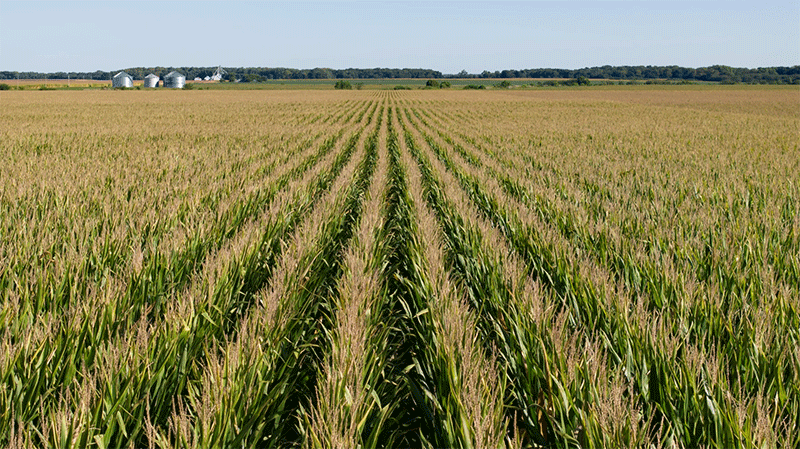
Across the U.S. Corn Belt, a quiet transformation is taking root. Farmers like Chad Moore of central Illinois are dedicating portions of their acreage to a novel crop: short-stature corn. Standing three to four feet shorter than traditional hybrids, these varieties, such as Bayer’s Preceon Smart Corn System, are not merely an aesthetic curiosity. They represent a fundamental rethinking of corn architecture, promising enhanced resilience and productivity in an era of increasing climatic and economic pressures.
The agronomic case for shorter corn rests on three core pillars: standability, input flexibility, and yield potential.
1. Unshakable Resilience: A primary driver is resistance to lodging. The 2020 derecho that devastated crops across Iowa is a stark reminder of this vulnerability. Alex Renaud of Bayer, whose family farm suffered a near-total loss, confirms that shorter-stature hybrids would have likely remained standing. This resilience is increasingly critical as the frequency and intensity of extreme weather events rise. A study from the University of Illinois suggests that annual crop losses from lodging in the U.S. can exceed 5% in severe storm years, representing a massive economic drain.
2. Precision Agronomy Unleashed: The shortened canopy eliminates the traditional “spray window” limitation. Farmers can apply fertilizers, fungicides, and pesticides with ground-based rigs throughout the growing season. This is a game-changer for in-season nutrient management and disease control, particularly in humid years that favor fungal pathogens like tar spot. As Wendy Srnic of Corteva Agrisciences notes, this allows for a precision and timing that aerial application cannot match, optimizing input efficacy and potentially reducing waste.
3. The Yield Ceiling, Redefined: The most compelling promise lies in yield. The upright leaf architecture of short-stature corn allows for higher plant populations without the mutual shading and competition that cause stress in taller hybrids. Companies like Stine Seed Company discovered this by accident decades ago. Chad Moore has planted his Preceon corn at a 20% higher density per acre. This directly translates to more ears per unit area, pushing the potential yield ceiling higher. In a world where global corn demand is projected to increase by nearly 15% over the next decade, according to the FAO, such intensification is crucial.
Beyond Breeding: The Next Frontier
While current offerings from Bayer, Corteva, and Stine are the result of traditional breeding, the future points to gene editing. Techniques like CRISPR allow for targeted adjustments to plant height and other traits without the genetic “baggage” of conventional breeding, accelerating the development of optimized “designer” plants. Researchers like Prof. Pat Schnable at Iowa State are already using computational models to design the ideal corn plant, questioning the optimal number of leaves and their angle to maximize photosynthesis.
The short-stature corn movement is more than a niche trend; it is a logical evolution in the pursuit of agricultural efficiency and resilience. While it is too early to declare a new Green Revolution, the parallels in shifting plant architecture for higher yields are undeniable. The adoption curve will be steep if the promised benefits—unmatched standability, season-long input access, and quantifiable yield gains—are realized at scale. For forward-thinking farmers, agronomists, and engineers, the question is no longer if short corn will play a role in the future of farming, but how large that role will be. As with any innovation, the ultimate decision rests with growers, but the early data and farmer testimonials suggest that shorter stalks may soon support a heavier weight of the agricultural economy.
Error