• About
  • Advertise
  • Careers
  • Contact
Friday, December 5, 2025
  • Login
No Result
View All Result
Field Crops news
  • Home
  • News
  • AgroTech & Innovation
  • Science
  • Sustainability
  • Market News
  • Research & Development
  • Home
  • News
  • AgroTech & Innovation
  • Science
  • Sustainability
  • Market News
  • Research & Development
No Result
View All Result
Field Crops news
No Result
View All Result
Home News

The Resurgence of Kodo Millet: A Quick and Profitable Crop for Modern Farmers

by Tatiana Ivanova
31 July 2024
in News, seeds
0
The Resurgence of Kodo Millet: A Quick and Profitable Crop for Modern Farmers
0
SHARES
1
VIEWS
Share on FacebookShare on Twitter

Revitalizing an Ancient Crop

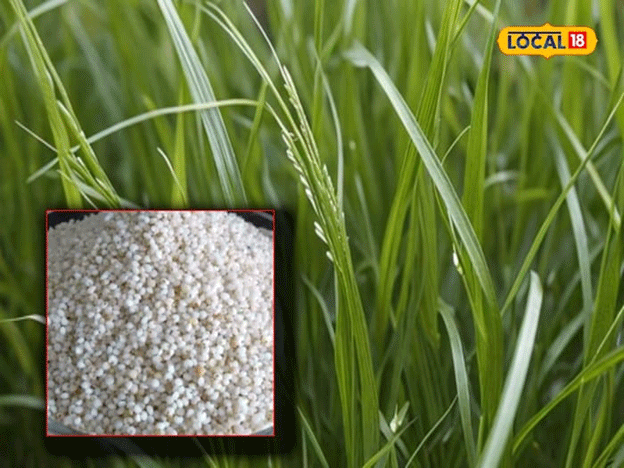
Kodo millet, also known as “Shri Ann,” was a staple in ancient diets due to its rich nutrient profile. Over time, it lost prominence as modern grains took over. However, recent government initiatives and health recommendations are rekindling interest in this ancient grain. The Indian government is now actively promoting the cultivation of kodo millet by providing free seed kits and encouraging farmers to integrate it into their cropping systems.

Cultivation Practices and Benefits

According to Dr. N.P. Gupta, an agricultural expert at the Niamatpur Agricultural Science Center, kodo millet is a key crop for the Kharif season. It thrives on minimal resources and can be planted by the end of July. This low-cost crop is known for its high nutrient density, offering more iron, zinc, and manganese compared to other grains.

The cultivation process for kodo millet involves several steps:

  1. Field Preparation: Begin by plowing the field with a disc harrow, followed by a rotary tiller to ensure the soil is loose and well-aerated. Level the field with a plough.
  2. Fertilization: Before the final plowing, apply two cartloads of well-rotted manure, 40 kg of nitrogen, 30-40 kg of phosphorus, and 20-25 kg of potassium per hectare.
  3. Sowing: Plant kodo millet seeds at a rate of 8-10 kg per hectare. Maintain a spacing of 15-20 cm between rows and 10 cm between plants.

Dr. Gupta highlights that kodo millet matures within 60-80 days, yielding between 15-20 quintals per hectare. Market prices for kodo millet range from ₹2,400 to ₹2,500 per quintal, making it a profitable venture for farmers due to its low cultivation costs and high market value.

Health Benefits and Market Potential

Kodo millet is not only beneficial for farmers but also for consumers. Its high iron, zinc, and manganese content enhances immunity and provides substantial health benefits. The resurgence of kodo millet reflects a broader trend towards incorporating more nutritious and traditional grains into modern diets.

Error

Tags: Agricultural ProfitsAncient GrainsCrop Cultivationgovernment supporthealth benefitsIndian FarmingKodo MilletNutritional Grainssustainable agriculture

Tatiana Ivanova

Next Post
High risk of fusarium infection after wet weather

High risk of fusarium infection after wet weather

Newsletter

Pesticide Overload: Tatarstan’s Contaminated Grain Batch Highlights Wider Food Safety Challenge

Pesticide Overload: Tatarstan’s Contaminated Grain Batch Highlights Wider Food Safety Challenge

28 September 2025

Ukrainian Corn Prices Set to Drop in June: Market Trends and Global Competition

6 June 2025

Rusagro’s New Rice Project in Primorye: A $23 Billion Investment to Boost Russian Rice Production

5 November 2024

Russia’s Record Rice Harvest: A Promising Future for National Agriculture

14 January 2025

Strategic Grain Allocation: Punjab’s Feed Wheat Ban and the Global Pressure on Food Security

11 September 2025

Navigating India’s Food Inflation: The Critical Role of Wheat and Sugar Production

10 March 2025

Russia’s Harvest Surges Past 105 MMT, Government Backs Record-Breaking Season with $1.3 Billion in Support

14 September 2025

Extreme Weather in Zabaykalsky Krai: 40,000 Hectares of Grain Lost Due to Unfavorable Conditions

29 October 2024

Rising Rice Prices in Indonesia: Addressing the Gap Between Market Rates and Government Price Caps

2 September 2024

China’s Drastic Grain Import Drop: What It Means for Global Agriculture

22 May 2025
  • About
  • Advertise
  • Careers
  • Contact
Call us: +51 93 999 5140

© 2020-2024 Field Crops news

Welcome Back!

Login to your account below

Forgotten Password?

Retrieve your password

Please enter your username or email address to reset your password.

Log In
No Result
View All Result
  • Home
  • News
  • Science
  • Sustainability
  • AgroTech & Innovation
  • Market News
  • Science
  • Research & Development
  • About
  • Contact

© 2020-2024 Field Crops news