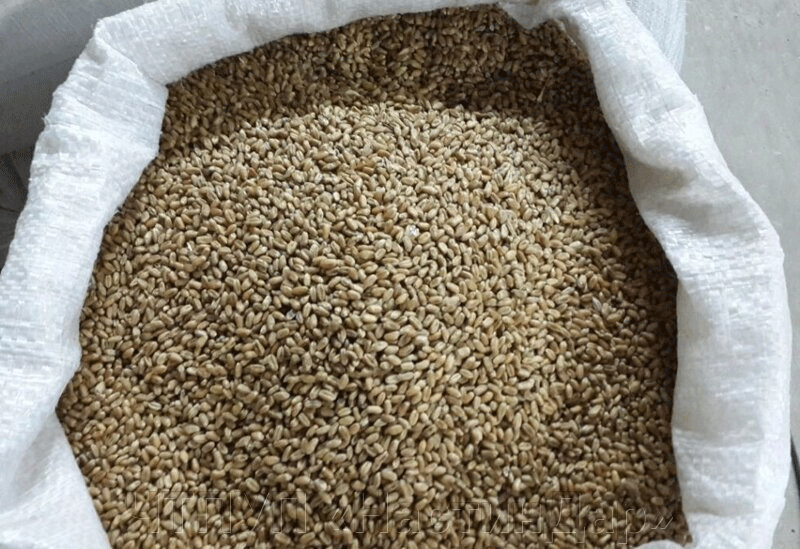
The global grain map is being redrawn, and the data from Turkey’s August 2025 imports provides a clear snapshot of this new reality. Despite an overall monthly decline in Turkey’s grain imports, Russia achieved a remarkable trifecta, becoming the single largest supplier of wheat, barley, and corn. This dominance is particularly striking in the wheat sector, where Russia accounted for a staggering 97% of Turkey’s total wheat imports (267.6 thousand tons out of 275.7 thousand tons). This move consolidates a trend that has been building since the expansion of the Black Sea Grain Initiative and its subsequent iterations, which have reshaped traditional supply routes and solidified Russia’s position as an agricultural powerhouse.
Analyzing the Market Shift and Strategic Implications
The scale of Russian dominance goes beyond wheat. It also displaced other key regional players to become Turkey’s leading supplier of both barley (33.9 thousand tons) and corn (89.5 thousand tons), commodities where Ukraine and the European Union have historically been strong competitors. This shift is underpinned by logistical advantages and competitive pricing. Russia’s geographic proximity to Turkey via the Black Sea provides a significant freight cost advantage. Furthermore, according to recent reports from the International Grains Council, Russia has maintained a record wheat harvest for the 2024/25 season, estimated at over 90 million tons, creating a large exportable surplus that it can offer at competitive prices. While Turkey’s total grain import volume fell by 43% in August—a typical seasonal adjustment as the domestic harvest concludes—its sourcing became markedly less diversified, increasing its strategic reliance on Russian supply.
Russia’s capture of the top supplier spot across all three major grains in a single month is more than a statistical anomaly; it is a testament to a strategic and sustained effort to dominate key export markets. For Turkish buyers and the global trade community, this underscores a market that is becoming more concentrated and potentially less flexible. For competing exporters in the EU, North America, and South America, it signals the intense competition for market share in a world where geopolitical alliances and logistical corridors are as important as price and quality. The August 2025 Turkish import data serves as a powerful indicator that the era of diversified grain sourcing may be giving way to an age of regional hegemony, with Russia firmly establishing itself as the breadbasket for its neighboring markets.
Error