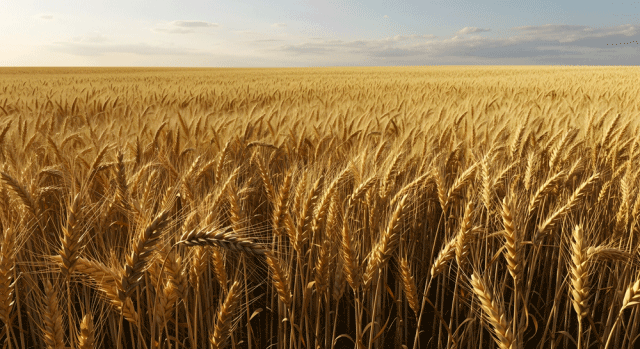
Wheat remains a staple food for billions of people, primarily in the form of bread. However, the relentless pursuit of higher yields and cost efficiency in agriculture has led to a troubling trend—declining nutritional value in wheat. While global wheat production has reached 789 million metric tons (2023/24, USDA), studies suggest that modern wheat varieties contain fewer essential nutrients than those grown decades ago.
The Shift from Nutrition to Yield
Industrial agriculture has prioritized high-yielding, disease-resistant wheat strains, often at the expense of fiber, vitamins, and minerals. According to research, wheat provides over 20% of the world’s dietary fiber, minerals, and micronutrients. Yet, refining processes strip away much of this nutritional content. For example:
- Whole wheat bread retains B vitamins, magnesium, iron, and fiber.
- White bread, made from refined flour, loses up to 80% of these nutrients during processing.
Additionally, excessive consumption of refined wheat products has been linked to blood sugar spikes, prompting nutritionists to recommend bread with at least 3g of fiber per serving and no added sugars.
Scientific Efforts to Restore Wheat’s Nutritional Value
Researchers at the University of Hohenheim (Germany) are leading efforts to reverse this trend. By analyzing 6,000+ traits across wheat varieties, they aim to identify genetic and agronomic factors that enhance nutrient density without compromising yield. Their findings could pave the way for biofortified wheat, rich in zinc, iron, and other critical micronutrients.
Balancing Yield and Nutrition
The future of wheat depends on a shift in priorities—from sheer productivity to nutrient-dense, sustainable farming. Farmers, agronomists, and food scientists must collaborate to develop and promote wheat varieties that deliver both high yields and optimal nutrition. Consumers, too, can drive change by choosing whole grain products and supporting transparency in food labeling.
Error