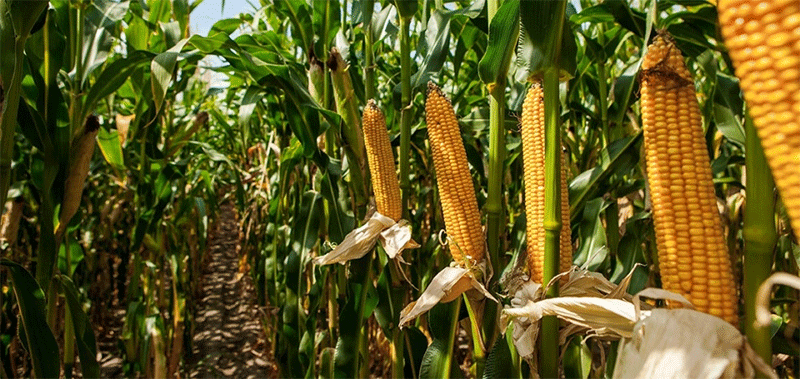
Thailand, a major feed grain consumer and a traditional buyer from neighboring Southeast Asian nations, has announced a dramatic policy shift. As part of a broader trade agreement with the United States, it will eliminate the 20% in-quota tariff on U.S. feed corn and increase its import quota from 54,600 metric tons to 1 million metric tons annually—an 18.3-fold increase. This commitment, part of a pledge to import approximately $2.6 billion worth of U.S. agricultural products, sends ripples across global agricultural trade lanes.
This move is strategically multi-faceted. Primarily, it secures a reliable, large-scale supply of a critical raw material—feed corn—for Thailand’s robust livestock sector, which is central to its export-oriented pork and poultry industries. The government explicitly aims to “sufficiently secure raw materials needed for livestock feed production.” However, recognizing the potential impact on its own corn farmers, Thailand has built in safeguards. The import window for this U.S. corn is restricted to February through June, avoiding the key domestic harvest period in the fourth quarter. Furthermore, feed mills importing U.S. corn are mandated to purchase three times the import volume in domestic Thai corn, a direct mechanism to support local growers.
Perhaps the most forward-looking aspect of this policy is its environmental linkage. Thailand announced it will block imports of feed corn from countries practicing slash-and-burn agriculture to reduce air pollution. This directly impacts its current major suppliers—Myanmar, Laos, and Cambodia—where such practices are prevalent. This aligns with growing global consumer and corporate demand for deforestation and burn-free supply chains. According to a 2023 report by the FAO and UNEP, agricultural residue burning is a major contributor to transboundary haze and greenhouse gas emissions in Southeast Asia, prompting importers to seek more sustainable sourcing. The U.S. corn sector, largely powered by large-scale mechanized production, is positioning itself as an alternative, despite its own environmental debates around inputs and monoculture.
Thailand’s policy is not an isolated event but a microcosm of modern agricultural trade’s complexities. It balances domestic economic interests (supporting local farmers while securing cheap feed for industry), geopolitical trade obligations (fulfilling agreements with a key partner), and emerging sustainability standards. For farmers and agribusinesses worldwide, it underscores that market access is increasingly tied not just to price and quality, but to verifiable production practices. The re-routing of a million-ton corn stream from Southeast Asia to the U.S. Midwest will create winners and losers, alter local price structures, and set a precedent for how environmental criteria can be leveraged as both policy tool and trade barrier. The future of commodity trade will be written at this intersection of economics, policy, and sustainability.