• About
  • Advertise
  • Careers
  • Contact
Friday, December 5, 2025
  • Login
No Result
View All Result
Field Crops news
  • Home
  • News
  • AgroTech & Innovation
  • Science
  • Sustainability
  • Market News
  • Research & Development
  • Home
  • News
  • AgroTech & Innovation
  • Science
  • Sustainability
  • Market News
  • Research & Development
No Result
View All Result
Field Crops news
No Result
View All Result
Home Climate

Syria’s Wheat Crisis: Drought, War, and a Looming Famine for 16 Million

by Tatiana Ivanova
3 July 2025
in Climate, News
0
Syria’s Wheat Crisis: Drought, War, and a Looming Famine for 16 Million
0
SHARES
1
VIEWS
Share on FacebookShare on Twitter

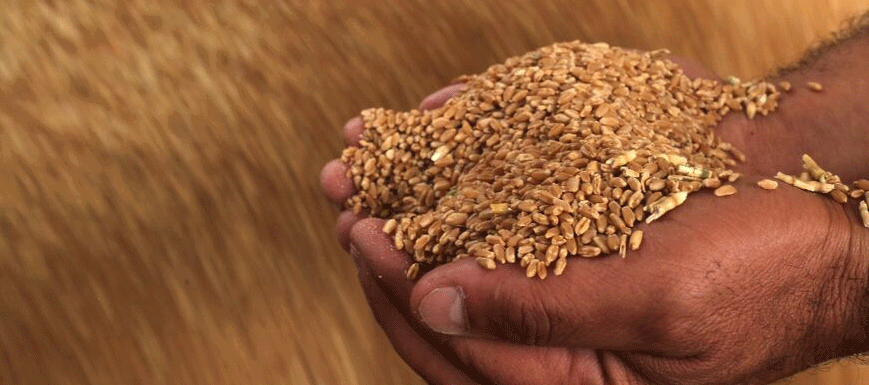
Syria, once a self-sufficient wheat producer, is now grappling with a catastrophic food crisis fueled by relentless drought, prolonged conflict, and economic devastation. According to the United Nations Food and Agriculture Organization (FAO), the country is experiencing its worst drought in six decades, with rainfall levels plummeting and water reserves critically depleted.

A Collapse in Wheat Production

Before the civil war in 2011, Syria produced an average of 4.1 million tonnes of wheat annually, meeting domestic demand. However, 14 years of conflict have decimated agricultural infrastructure, leaving farms in ruins and farmers displaced. The FAO estimates that harsh weather conditions have impacted 2.5 million hectares of wheat-growing land, with 75% of cultivated areas suffering severe damage.

Haya Abu Assaf, an FAO representative in Syria, warns that the country now faces a wheat deficit of 2.5 to 2.7 million tonnes, far below the amount needed to feed its population. This shortfall puts 16.3 million Syrians—nearly 70% of the population—at risk of food insecurity in 2024.

Climate Change and Water Scarcity

Syria’s water crisis has worsened dramatically, with rainfall levels dropping significantly compared to previous years. The shortened winter rainy season has left reservoirs and groundwater supplies critically low, affecting not only crops but also livestock grazing lands. Abu Assaf notes that natural pastures for livestock have also been severely impacted, threatening the already fragile food supply chain.

Dependence on Imports and Geopolitical Struggles

With 90% of Syrians living in poverty, the country can no longer rely on domestic wheat production. Before his ouster, President Bashar al-Assad depended on Russian wheat imports to mitigate shortages. However, economic sanctions, logistical challenges, and competition between Syrian and Kurdish-controlled regions have further complicated food distribution.

Syria’s agricultural collapse is a stark reminder of how climate change and conflict can intertwine to create humanitarian disasters. Without immediate international intervention, 16 million people could face starvation in the coming months. Sustainable water management, investment in drought-resistant crops, and conflict resolution are critical to preventing a full-blown famine.

Error

Tags: agricultural collapseclimate change and farmingdrought impact on agricultureFAO Syriafood insecurityhumanitarian crisisSyria wheat crisiswar and agricultureWater Scarcitywheat production decline

Tatiana Ivanova

Next Post
Egypt’s Wheat Procurement Falls Short: Implications for Farmers and Global Markets

Egypt’s Wheat Procurement Falls Short: Implications for Farmers and Global Markets

Newsletter

Syngenta to Construct €9.6 Million Innovation Center in El Ejido

Syngenta to Construct €9.6 Million Innovation Center in El Ejido

3 July 2024

Prime Agricultural Holdings for Sale: Opportunities in New South Wales, Northern Territory, and Queensland

9 July 2024

Chuvashia Exports 884 Tons of Wheat to Azerbaijan: A Boost for Russia’s Agricultural Trade

30 September 2024

Drought Crisis in Southern Russia: 25% Crop Losses Threaten Wheat, Corn, and Sunflower Production

3 August 2025

Strong Demand for Mixed-Farming Properties in North-West NSW

5 August 2024

Soil CRC Invests $4.1 Million in Research to Enhance Soil Management and Farming Practices

3 July 2024

Rye Harvest at Risk: The Lowest in Five Years – What It Means for Russian Agriculture

1 September 2024

From Field to Table and Back Again: Sustainable Rye Straw Innovation in Japan

23 November 2024

Beyond the Yield Ceiling: How Root System Optimization is Revolutionizing Nitrogen Use Efficiency in Wheat

6 September 2025

Drought-Resistant Maize: A Lifeline for Zimbabwe’s Farmers and a Global Agricultural Imperative

22 March 2025
  • About
  • Advertise
  • Careers
  • Contact
Call us: +51 93 999 5140

© 2020-2024 Field Crops news

Welcome Back!

Login to your account below

Forgotten Password?

Retrieve your password

Please enter your username or email address to reset your password.

Log In
No Result
View All Result
  • Home
  • News
  • Science
  • Sustainability
  • AgroTech & Innovation
  • Market News
  • Science
  • Research & Development
  • About
  • Contact

© 2020-2024 Field Crops news