

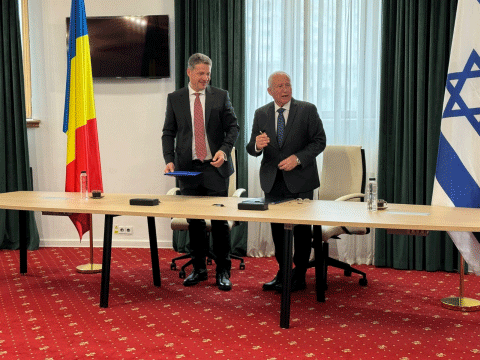
The agreement with Romania is a crucial addition to Israel’s network of emergency wheat suppliers. Situated in Eastern Europe, Romania offers Israel a reliable and geographically accessible source of wheat in times of crisis. The MoU was signed with the President of Romania’s Emergency Management Authority, Georgian Pop, and is a direct continuation of Israel’s efforts to secure its food supply chains amidst global uncertainties.
During his visit, Minister Dichter also engaged in discussions with Romanian Agriculture Minister Dr. Florin Barbu, Jewish Community President Silviu Vexler, and Călin Coșer, President of the Israel-Romania Chamber of Commerce. These meetings aimed to explore the practical implementation of the agreement and to identify further opportunities for collaboration between the two nations.
Responding to Global Wheat Supply Challenges
The urgency behind these agreements stems from the ongoing global wheat supply challenges exacerbated by the conflict between Russia and Ukraine. In 2022, the war led to significant disruptions in global wheat supplies, causing a spike in commodity prices and creating import barriers. As Ukraine and Russia are major global wheat exporters, the conflict highlighted the vulnerabilities in relying on a limited number of import sources.
In response, Israel’s Ministry of Agriculture launched the “Treat The Wheat” project, an initiative aimed at enhancing Israel’s long-term food reserves, particularly focusing on wheat. The project underscores the importance of diversifying import sources to mitigate risks associated with climate change, regional conflicts, and global pandemics. By expanding its import network, Israel seeks to ensure its national food security remains resilient against future disruptions.
The Strategic Importance of Wheat in Israel’s Food Security
Wheat is a critical component of Israel’s food security strategy, given its role as a staple food. The agreements with Romania and other countries reflect Israel’s commitment to securing a steady and reliable supply of wheat, especially in times of emergency. These agreements are not only about securing imports but also about fostering strong diplomatic and trade relationships with key wheat-producing countries.
In light of climate change and geopolitical instability, the Ministry of Agriculture emphasizes the necessity of having multiple import sources. This approach ensures that Israel can maintain stable wheat supplies even if one or more sources become unavailable due to unforeseen circumstances.
A Proactive Approach to Food Security
Israel’s recent agreement with Romania represents a proactive approach to ensuring the nation’s food security. By diversifying its sources of wheat imports and securing emergency supply agreements, Israel is better prepared to face global supply chain disruptions. This strategy highlights the importance of resilience in agricultural planning, ensuring that the country can continue to meet its food needs regardless of external challenges.
Error