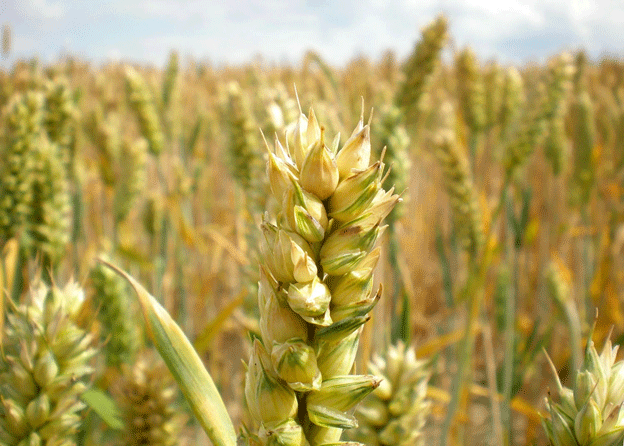
USDA Lowers Russia’s Wheat Export Forecast to 44 Million Tonnes: A Signal for Global Market Adjustments
In its April 2025 World Agricultural Supply and Demand Estimates (WASDE) report, the U.S. Department of Agriculture (USDA) revised Russia’s wheat export forecast down to 44 million tonnes, a 1 million tonne decrease from the previous season and 500,000 tonnes lower than the March estimate.
The USDA’s decision reflects evolving market realities, including changing global demand, logistical factors, and export competition. While Russia remains the world’s largest wheat exporter, this adjustment brings more attention to the fragility of supply chains and the influence of geopolitical and climatic uncertainties.
Breakdown of the April Forecast
Russian Wheat Outlook:
- Wheat exports: Now forecast at 44 million tonnes, down from 45 million projected in March, and 1 million below the 2023–2024 season.
- Wheat production: Unchanged at 81.6 million tonnes.
- Feed grain (barley, oats, sorghum): Forecast at 34.78 million tonnes.
- Corn production: Maintained at 14 million tonnes.
- Feed grain exports: Barley – 6.65 million tonnes, Corn – 3.3 million tonnes.
Despite this reduction, Russia’s wheat exports will still account for over 21% of global trade, according to USDA and International Grains Council (IGC) estimates, keeping it well ahead of competitors like the EU, U.S., and Australia.
European Union Export Forecast:
- The USDA also reduced its EU wheat export estimate from 27 million tonnes to 26.5 million tonnes, citing sluggish demand and intensified competition in key North African and Middle Eastern markets.
Global Production Trends:
- World wheat production was slightly reduced from 797.23 million tonnes to 796.88 million tonnes (a 350,000-tonne drop).
- Corn production globally saw an upward revision from 1.214 billion tonnes to 1.215 billion.
- Total global feed grain production saw a marginal decline from 1.49507 billion tonnes to 1.49503 billion tonnes.
It’s also noteworthy that USDA continues to exclude production and export data from Crimea and other territories recently integrated into Russia, potentially underestimating actual totals.
Interpreting the Forecast for Farmers and Exporters
The trimmed forecast does not suggest a crisis, but it does highlight increasing volatility in the global grain market. A few key takeaways for agricultural professionals:
- Wheat remains Russia’s stronghold, even with a moderate decline in projected exports.
- Competition from Argentina, the EU, and the U.S. is rising, especially with improving crop conditions in those regions.
- Geopolitical and trade policy shifts (such as sanctions, tariffs, or regional conflicts) remain significant risk factors for market participants.
- Stable domestic production levels in Russia support continued export potential, but logistics, port access, and currency fluctuations could influence outcomes.
Russia’s wheat export downgrade to 44 million tonnes reflects a modest but important adjustment in the global balance sheet for 2024–2025. While the country remains the largest exporter, tighter margins and greater global competition will pressure Russian exporters to maintain price competitiveness and strategic market access. For international buyers and grain producers alike, USDA’s April report is a reminder to watch supply-and-demand signals closely as the season progresses.
Error