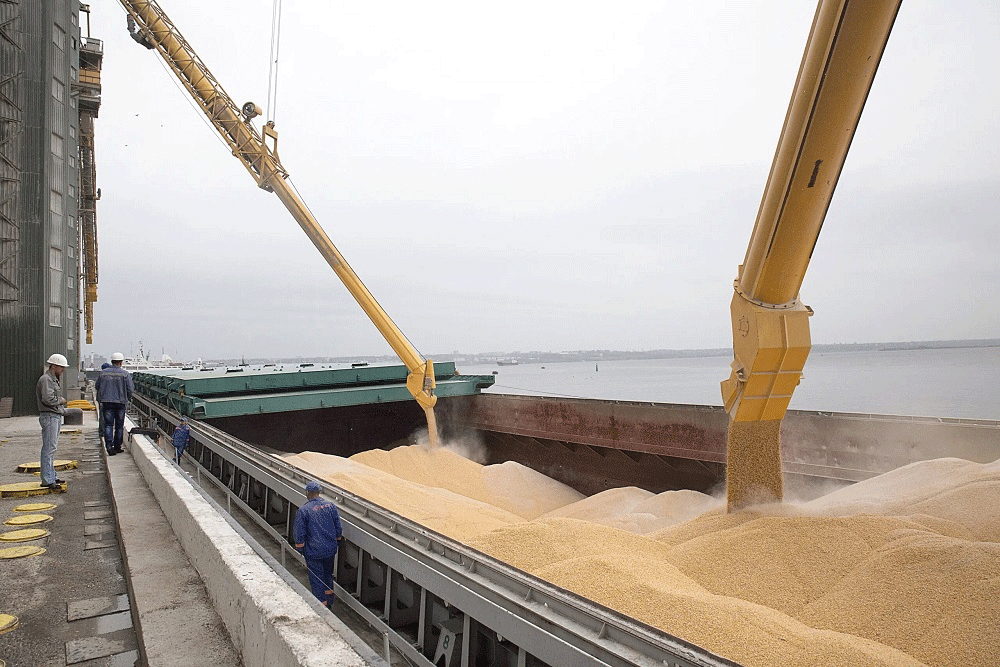
Russia’s agricultural export sector demonstrated formidable strength this August, posting its best monthly performance of the year. According to the federal center for the development of agro-industrial exports (“Agroexport”), August wheat shipments abroad reached a landmark $780 million in value. In volume terms, exports hit approximately 3.5 million tons, a staggering 2.8-fold increase over July’s figures. This surge not only highlights a recovery from seasonal lows but also reinforces the structural shifts in global grain trade flows.
The geographic distribution of these exports is as telling as the volume. Egypt solidified its position as the cornerstone of Russian wheat trade, accounting for a dominant 24% of the physical shipments in August. Other key destinations included Turkey (9%), Bangladesh (5%), Israel (5%), and Sudan (5%). The remaining 52% was distributed among a wide range of countries, illustrating the broad and diversified nature of the demand for Russian grain. This aligns with recent USDA Foreign Agricultural Service reports, which note that traditional buyers in the Middle East and North Africa (MENA) are being joined by an increasing number of Asian and sub-Saharan African nations, creating a resilient and multi-polar demand base for major exporters like Russia.
The momentum from August appears to be accelerating. The analytical center of the company “Rusagrotrans” provided an even more optimistic forecast, estimating export volumes for August at nearly 4.4 million tons. Looking ahead, they project shipments for September to reach an impressive 4.3–4.5 million tons, with about 2.2 million tons already expected in the first 18 days of the month. This robust pipeline suggests that Russia is on track for one of its strongest export seasons on record. This performance is supported by large harvests and competitive pricing. According to the International Grains Council (IGC), Russia’s wheat production for the 2024/25 season remains one of the largest globally, providing a solid foundation for continued export strength despite logistical and geopolitical challenges.
The record-breaking August exports are not an anomaly but a testament to the matured capacity of Russia’s grain export machine. The combination of a large domestic harvest, competitive pricing, and deeply entrenched trade relationships with key importing nations creates a powerful foundation for sustained market dominance. For global market participants—from farmers in competing export nations to import-dependent governments—this signals that Russian wheat will remain a defining and abundant force in the global grain balance sheets for the foreseeable future. The key takeaway is the market’s resilience and its ability to adapt to new trade corridors, ensuring a steady flow of grain from the Black Sea to the world.
Error