Shift in Russian Agriculture
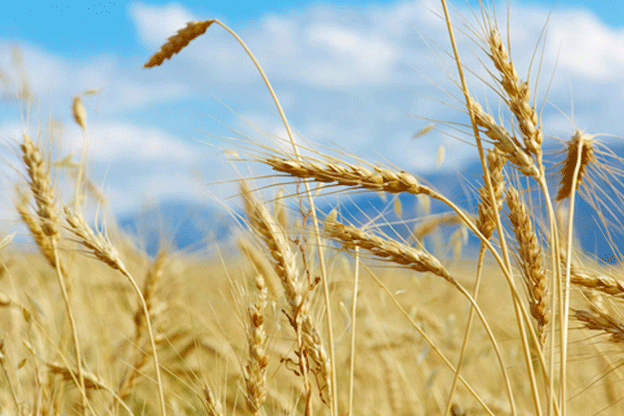
Russian farmers, reeling from substantial losses in wheat farming this year, are reducing wheat acreage in favor of alternative crops. The move, reported by Reuters, comes amid challenging weather conditions and declining profit margins for wheat production. This shift not only affects local agricultural dynamics but could also have far-reaching consequences for global wheat markets.
Declining Wheat Production
Russia’s wheat harvest for 2024 is projected to fall to 83 million tons, down from 92.8 million tons in 2023 and a record 104.2 million tons in 2022. Frosts, droughts, and reduced profit margins have taken a toll. Additionally, the area planted with winter wheat, which accounts for the majority of the country’s wheat production, is expected to decline by 10%, hitting its lowest level since 2019.
Despite high export volumes earlier this year, tighter export quotas and lower yields are expected to slow Russia’s wheat exports. From January 2025, the government plans to reduce export quotas by two-thirds to control domestic food prices, further complicating the outlook for wheat growers.
Farmers Diversify to Survive
Faced with these challenges, many farmers are turning to crops that promise higher profitability and resilience:
- Peas and Lentils: Legumes are in demand both domestically and internationally, providing farmers with better margins.
- Sunflowers: The oilseed market remains robust, with sunflower oil a key export commodity.
- Other Rotational Crops: Diversification helps mitigate risks from climate and market fluctuations.
These decisions reflect broader shifts in Russian agriculture, where profitability and sustainability increasingly shape planting strategies.
Implications for Global Markets
Russia’s dominance in wheat exports has made it a critical player in global food security. Key wheat importers like Egypt and Turkey depend heavily on Russian grain. A decline in Russia’s wheat output could:
- Drive Up Global Prices: Reduced supply from the world’s largest wheat exporter would put upward pressure on prices, especially as other major producers like the U.S. and Canada face their own challenges.
- Increase Food Inflation: Countries reliant on imported wheat may experience higher food prices, exacerbating inflationary pressures.
Challenges to Russia’s Agrarian Ambitions
The shift away from wheat also poses challenges to President Vladimir Putin’s vision of solidifying Russia as an agricultural superpower. Reduced wheat production could weaken Russia’s influence in international grain markets and reduce its leverage in geopolitical negotiations involving food security.
The pivot away from wheat by Russian farmers underscores the vulnerability of agricultural systems to climate, economic pressures, and policy changes. While alternative crops offer short-term relief to struggling farmers, the implications for global food security and Russia’s agricultural strategy are significant. Balancing profitability, sustainability, and market leadership will be crucial for the future of Russian agriculture.
Error