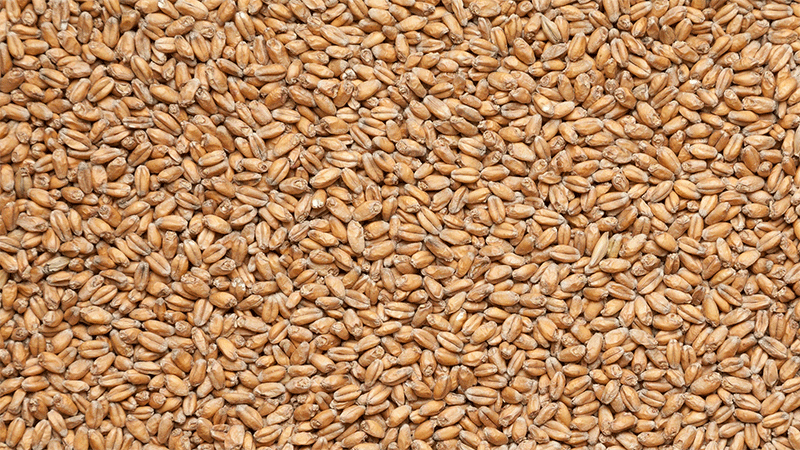
The latest analytical report from Kazakhstan’s Grain Union for September 15-21 paints a nuanced picture of the Central Asian grain market. While overall volumes may be stable, the value of quality is becoming increasingly pronounced. Export prices for specific classes of high-gluten Kazakh wheat rose last week, highlighting a growing premium on protein and quality in the global market.
The price increases were not uniform across the board, underscoring the precision of current demand. According to the Committee of Analytics:
- Wheat of the 3rd class with 23-24% gluten became more expensive by $1 per ton.
- Wheat of the 3rd class with 25-26% gluten increased by $2 per ton.
- The most significant jump was for premium 3rd class wheat with 28-29% gluten, which rose by $5 per ton.
Notably, prices for wheat with 27% and 30%+ gluten remained stable, suggesting a very specific demand window. The core drivers, as identified by analysts, are the classic economic duo of constrained supply and sustained demand from both domestic flour producers and foreign buyers. This trend aligns with the 2023 FAO report on global grain markets, which emphasizes that price volatility is increasingly tied to the quality of available stocks, not just quantity. In contrast, barley export prices remained unchanged, with weak demand from key markets like Iran and China serving as a cautionary note for exporters.
However, the story continues beyond the farm gate or the elevator. A major headwind for Kazakh exporters is the rapidly escalating cost of logistics. Yevgeny Karabanov, head of the Grain Union’s Committee, reported that comprehensive logistics services (wagon rental + rail tariffs) to Central Asian countries have surged by 30-35%, or $8-10 per ton, since the end of August. This is attributed to seasonal demand for wagons, increased tariffs in Russia due to port congestion, and a consequent reduction in the available wagon fleet within Kazakhstan. Market participants anticipate further price hikes in October. This logistical squeeze mirrors global trends; the World Bank’s Logistics Performance Index 2023 highlights that supply chain disruptions and increased transport costs remain significant inflationary pressures on agricultural trade worldwide.
To partially mitigate this, Kazakhstan’s National Grain Operator, “Prodcorporation,” has paid out 19.1 billion tenge in transport subsidies for exports to long-distance destinations, supporting the shipment of approximately 830,000 tons of wheat. This state intervention is crucial for maintaining competitiveness, but it underscores the severe pressure that logistics are placing on profit margins.
The situation in Kazakhstan provides a clear lesson for grain producers and exporters globally: the market is increasingly rewarding specific quality attributes. Investing in and segregating high-quality, high-protein wheat can provide a critical price advantage. However, this premium is being challenged by rampant logistics inflation. Success in the current export environment requires a dual focus: optimizing agronomic practices for quality and implementing sophisticated supply chain management to navigate the volatile and costly transportation landscape.
Error