• About
  • Advertise
  • Careers
  • Contact
Friday, January 30, 2026
  • Login
No Result
View All Result
Field Crops news
  • Home
  • News
  • AgroTech & Innovation
  • Science
  • Sustainability
  • Market News
  • Research & Development
  • Home
  • News
  • AgroTech & Innovation
  • Science
  • Sustainability
  • Market News
  • Research & Development
No Result
View All Result
Field Crops news
No Result
View All Result
Home Research & Development

Phyllosphere bacterial biocontrol agents for the suppression of rice foliar diseases

by Maria YEROKHOVA
10 July 2024
in Research & Development
0
Phyllosphere bacterial biocontrol agents for the suppression of rice foliar diseases
0
SHARES
5
VIEWS
Share on FacebookShare on Twitter

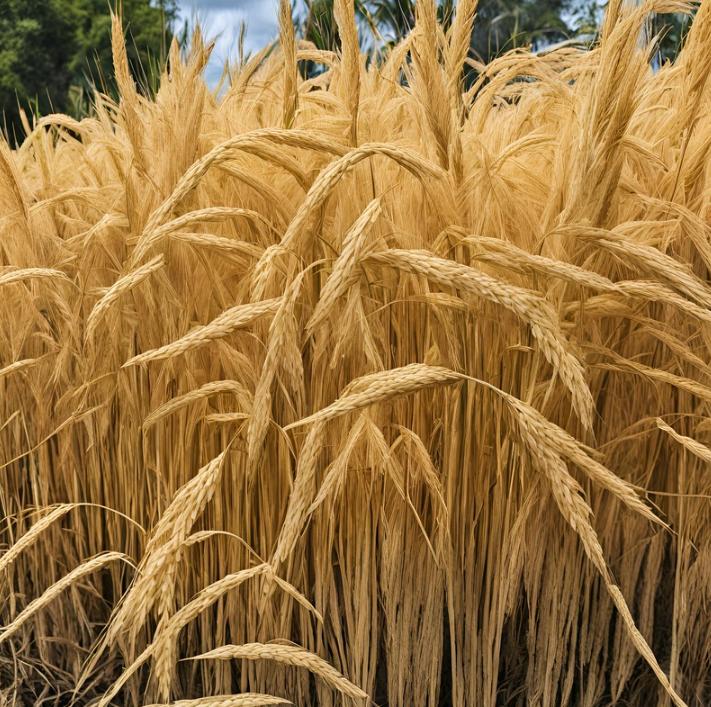
Phyllosphere colonizing antagonistic bacterial isolates were evaluated for managing major rice foliar diseases, namely brown spot caused by Bipolaris oryzae and sheath rot caused by Sarocladium oryzae in the research. Among these various isolates, Pseudomonas aeruginosa isolate 1 effectively inhibited the mycelial growth of B. oryzae and S. oryzae. The volatile compounds of Bacillus subtilis isolates effectively inhibited the mycelial growth of S. oryzae and B. oryzae. Non-volatile compounds of P. aeruginosa isolate 2 and B. subtilis isolate 1 recorded the maximum inhibition of mycelial growth of B. oryzae and S. oryzae, respectively. P. aeruginosa isolates produced fluorescent pigments and hydrogen cyanide (HCN), whereas isolates of Bacillus spp. did not. All the isolates of P. aeruginosa and Bacillus spp. produced protease enzymes. P. aeruginosa isolates solubilized phosphate, whereas isolates of Bacillus spp. did not. Rice seeds treated with these bacterial suspensions showed improvement in plant growth parameters. The foliar application of two bacterial strains, namely P. aeruginosa isolate 1 + B. subtilis isolate 1 recorded the minimum brown spot and sheath rot disease incidence.

Thus, the present showed that phyllosphere colonizing P. aeruginosa and B. subtilis have the potential application for managing foliar fungal diseases of rice plants.

Reerence: Sobanbabu, G., Oviya, R., Meena, B., Vijayasamundeeswari, A., Shanmugaiah, V., & Ramamoorthy, V. (2024). Evaluation of phyllosphere bacterial biocontrol agents for the suppression of rice foliar diseases. Journal of Phytopathology, 172, e13300. https://doi.org/10.1111/jph.13300

Error

Tags: Microbialsrice

Maria YEROKHOVA

Next Post
Rural Bank Mid-Year Outlook Highlights Positives

Rural Bank Mid-Year Outlook Highlights Positives

Newsletter

Drones Over the Fields: How Precision “Flying Defense” is Boosting Wheat Yields in Keping County

Drones Over the Fields: How Precision “Flying Defense” is Boosting Wheat Yields in Keping County

16 April 2025

Elusive Harvest: Why Russia May Face a Grain Shortfall in 2025

17 February 2025

Chelyabinsk Wheat Producers to Receive 155 Million Rubles in Subsidies

3 March 2025

Russia Shatters Grain Export Records: How Farmers and Markets Are Responding

15 June 2025

Kazakhstan Faces Wheat Supply Challenges Amid Currency Fluctuations and Trade Disputes

2 March 2025

Soybeans Over Barley: How Weather and Market Trends Are Reshaping Amur Region’s Crop Plans

24 June 2025

Wheat Farming in Pakur: A Path to Double Profits and Thriving Farmers

7 January 2025

Kazakhstan’s Corn Boom: Analyzing the Drivers of an Above-Average Harvest Forecast

21 August 2025

Primorsky Krai’s 10% Corn Production Surge: How Technology and Policy Are Fueling Growth

3 August 2025

Weathering the Storm: How Farmers in Orenburg Adapted to a Challenging 2024 Growing Season

10 September 2024
  • About
  • Advertise
  • Careers
  • Contact
Call us: +51 93 999 5140

© 2020-2024 Field Crops news

Welcome Back!

Login to your account below

Forgotten Password?

Retrieve your password

Please enter your username or email address to reset your password.

Log In
No Result
View All Result
  • Home
  • News
  • Science
  • Sustainability
  • AgroTech & Innovation
  • Market News
  • Science
  • Research & Development
  • About
  • Contact

© 2020-2024 Field Crops news