Rice Stockpile: A Boon Amid Production Challenges
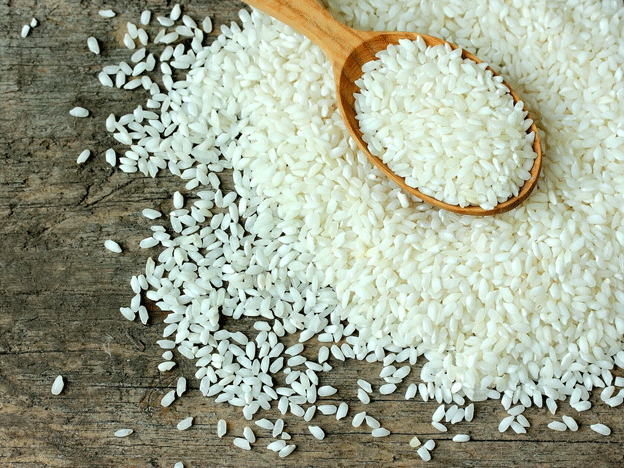
As of November 1, 2024, the Philippine rice inventory reached 2.46 million metric tons (MT), a significant 24.4% increase from the same period last year. This rise is attributed to substantial gains in the commercial sector (up by 57.4%) and National Food Authority (NFA) reserves (up by 135.2%), according to the Philippine Statistics Authority (PSA). Together, these sectors now account for 63.4% of total rice stocks, with the remaining 36.6% coming from households, which saw an 11.4% decrease.
Despite challenges such as typhoon disruptions and a projected decrease in local rice production, imports have cushioned the blow. Agriculture Assistant Secretary Arnel de Mesa assured that December’s rice supply would be sufficient, supported by imports expected to reach up to 4.5 million MT. The Department of Agriculture (DA) aims to maintain a 100-day rice reserve into the next harvest season.
Declining Corn Stocks: A Concern for Feed and Food
While rice stocks have flourished, corn inventories are down by 20.6%, standing at 619,160 MT compared to last year. The decline is most pronounced in the commercial sector, which accounts for 87.3% of the stock and saw a 21.3% drop. Household stocks also fell by 14.7%. This downward trend is concerning, as corn is a critical input for animal feed and food production.
The decline in corn supply coincides with weather-related production disruptions and market shifts. As the DA revises its palay (unhusked rice) output projections to 19.3 million MT for 2024—a lower-than-expected figure due to typhoons—similar climatic issues may have impacted corn yields.
Implications for the Agricultural Sector
- Food Security: The surge in rice stocks provides a buffer against food insecurity, but the reliance on imports highlights the need for sustainable local production strategies. Meanwhile, the drop in corn stocks could strain the livestock and poultry industries, which depend heavily on corn for feed.
- Market Dynamics: Farmers may face price volatility as supply imbalances between rice and corn could influence both local and export markets. Policymakers need to closely monitor these dynamics to ensure fair pricing and adequate supply.
- Strategic Planning: The government’s proactive import strategy for rice showcases a response to climatic challenges, but similar forward-thinking measures are needed to stabilize corn supplies. Investments in climate-resilient farming and post-harvest facilities could mitigate future risks.
The contrasting trends in rice and corn stocks underscore the complexity of managing agricultural supply chains in the Philippines. While the increase in rice reserves offers short-term relief, the decline in corn inventories calls for immediate attention to production and storage issues. For farmers, agronomists, and policymakers, these shifts highlight the importance of resilience and adaptation in ensuring food security and agricultural sustainability.
Error