How Data-Driven Practices Can Enhance Agricultural Sustainability
Growers could see significant boosts in productivity and profitability through the adoption of data-driven practices focused on carbon emissions, according to Sarah Hyland, Acting General Manager of Major Projects at GrainGrowers. Speaking at the inaugural Sustainable Ag Summit, Hyland highlighted the strong alignment between financial performance and carbon baselining.
Hyland emphasized that leading bulk handlers like CBH Group, GrainCorp, and Viterra might soon request carbon emission data from growers, influenced by ongoing Federal Government legislation debates. This initiative is part of broader efforts to reinvigorate the Australian Grains Sustainability Framework, aiming to align economic goals with environmental sustainability.
Optimizing to Reduce Emissions
Australian growers are among the world’s lowest carbon emitters, but further optimization can enhance their performance. Hyland underscored the importance of gathering baseline data to understand current emissions and identifying areas for improvement. She cited an example of a grower who, after baselining, discovered significant emissions from crop residue decomposition rather than just diesel use. Such insights can lead to changes in practices, like adjusting fertilizer usage or upgrading equipment, ultimately boosting profitability and reducing emissions intensity.
Future-Proofing Through Reporting
The Federal Government is currently debating legislation that would require businesses above a certain size to report on carbon emissions. While most farming operations may not meet these thresholds, the inclusion of Scope 3 emissions—which encompass indirect emissions during grain production—suggests that carbon reporting will become integral to future agricultural business practices. Hyland noted that transparency and proof of best practices would be crucial for future business transactions.
Reinvigorating the Grains Sustainability Framework
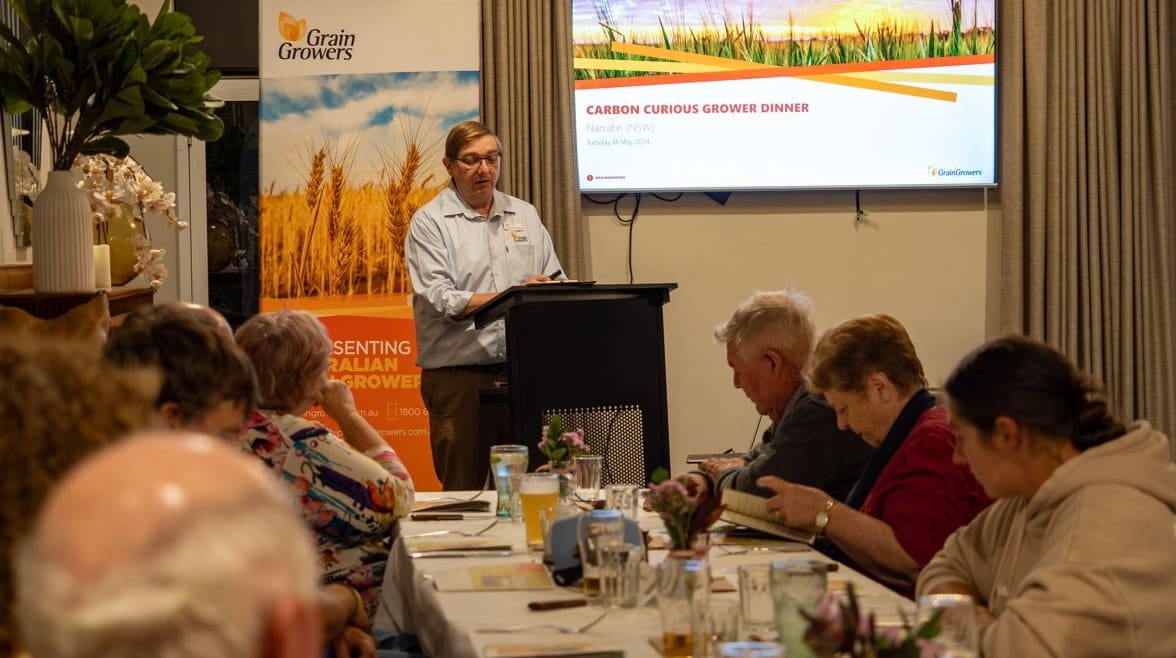
GrainGrowers is actively working to update the Grains Sustainability Framework, initially launched in 2019. This framework aims to define what sustainable grain means in the Australian context. The recent Carbon Curious Grower Dinners, held nationwide, aimed to educate growers about the latest developments in carbon management. The framework’s reinvigoration involves a new materiality study and the formation of a steering group to translate these findings into actionable guidelines.
The goal is to have a finalized framework by June 2025, following extensive industry consultation. This framework will help growers benchmark their operations against national standards, fostering a competitive and sustainable agricultural sector in Australia.
Error