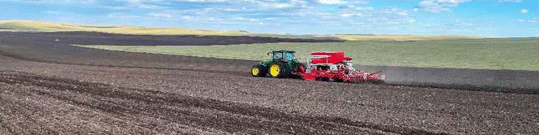
In the vast fields of Inner Mongolia, a quiet agricultural revolution is taking place. Montane Oats, founded in 2012 by Li Gangling, has defied conventional farming practices by completely eliminating synthetic fertilizers and pesticides. What began as an experiment has now grown into the world’s largest natural oat cultivation project, spanning 110,000 acres.
Why Natural Farming?
Li Gangling’s vision stemmed from growing concerns over industrial agriculture’s impact on soil health and food safety. Studies show that excessive chemical use degrades soil microbiota, reduces water retention, and leads to long-term yield decline (FAO, 2021). In contrast, Montane Oats relies on:
- Natural soil fertility – Leveraging the region’s rich, unpolluted land.
- Crop rotation & biodiversity – Enhancing resilience against pests and diseases.
- Minimal intervention – Allowing oats to grow at their natural pace, preserving nutritional integrity.
Despite initial skepticism, Montane Oats has proven that sustainable farming can be commercially viable. Yields have steadily increased, debunking the myth that organic farming means lower productivity.
From Farm to Table: A Truly Natural Product
Montane Oats has vertically integrated its operations, ensuring full traceability from seed to shelf. Their product line includes:
- Natural oat flakes & grains – Retaining high fiber, protein, and vitamin content.
- Oat milk – A chemical-free plant-based alternative gaining global demand.
The brand’s commitment to purity has earned prestigious certifications, including:
- China’s Ecological Origin Protected Product (2017)
- USDA, EU & China Organic Certifications (2018)
- Official supplier for the 2020 National Winter Games – Chosen for 5,000+ athletes’ diets.
The Future of Sustainable Agriculture
Li Gangling reflects, “Many doubted natural farming, but we’ve shown that health and sustainability can go hand-in-hand.” Montane Oats’ success offers a replicable model for:
- Soil regeneration – Reducing reliance on synthetic inputs.
- Climate resilience – Lowering carbon footprint compared to conventional oats.
- Consumer health – Delivering nutrient-dense, chemical-free food.
As demand for organic and sustainable products grows (projected to reach $272 billion by 2027, Statista), Montane Oats is poised to lead the shift toward eco-conscious agriculture.
Montane Oats demonstrates that large-scale natural farming is not only possible but profitable. By prioritizing ecosystem health over short-term gains, they provide a blueprint for the future of agriculture—one where sustainability and productivity coexist.
Error