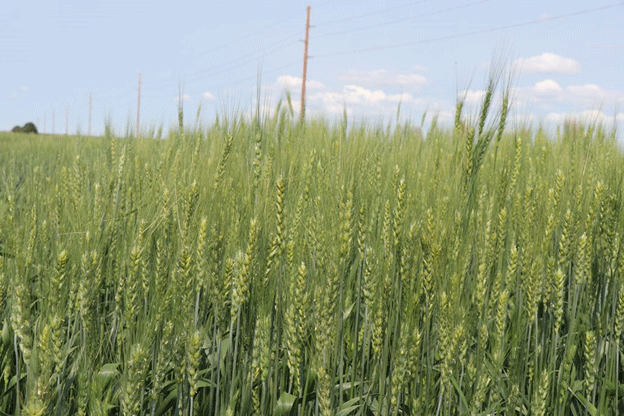
The Office of the United States Trade Representative (USTR), joined by Argentina, Australia, Canada, and Ukraine, recently submitted a counter-notification to the World Trade Organization (WTO) concerning India’s domestic support and subsidy programs for wheat and rice. This marks another step in exposing what many believe are trade-distorting practices that undermine global market stability.
India’s Minimum Support Price (MSP) system provides guaranteed prices for farmers, incentivizing overproduction of staple crops like wheat and rice. The resulting surplus often leads to large public stockpiles, which are occasionally offloaded onto international markets at subsidized rates. These actions disrupt global trade flows, harming farmers in exporting nations by depressing international prices.
Key Issues Highlighted by the U.S. and Allies
- Non-Transparency: The U.S. counter-notifications claim that India has not been transparent about the actual levels of support provided. WTO rules require nations to report their subsidies accurately, which critics argue India has failed to do.
- Market Distortion: India’s public stockholding practices exceed WTO-compliant limits, creating unfair competition in international markets. For instance, U.S. Wheat Associates (USW) and the National Association of Wheat Growers (NAWG) have pointed out that India’s policies create artificial price floors that distort trade.
- Crop Overproduction: By heavily incentivizing wheat and rice production, India discourages farmers from diversifying crops, exacerbating monoculture risks and resource depletion, particularly water scarcity in critical agricultural regions like Punjab and Haryana.
Global Response and Call for Compliance
Trade organizations such as USW and NAWG have lauded the USTR’s continued efforts to hold India accountable. “India’s approach undermines fair trade practices and blocks progress on agricultural negotiations at the WTO,” said USW President Vince Peterson. Similar sentiments were echoed by NAWG CEO Chandler Goule, who urged India to adhere to its WTO commitments to ensure fair market conditions.
Impacts on Farmers Worldwide
The overproduction and subsequent dumping of surplus crops by India have far-reaching effects:
- Price Suppression: Farmers in exporting countries face reduced earnings due to depressed global market prices.
- Market Instability: Importing nations reliant on stable markets for wheat and rice face uncertainties due to India’s unpredictable trade behavior.
- Environmental Costs: Excessive production exacerbates environmental challenges, including soil degradation and water resource depletion.
India’s subsidy practices present significant challenges to global agricultural trade, impacting farmers, exporters, and consumers alike. While ensuring domestic food security is critical, international rules exist to balance these priorities with fair trade principles. Continued pressure from WTO members may encourage India to adopt more transparent and compliant practices, fostering healthier global markets for wheat and rice.
Error