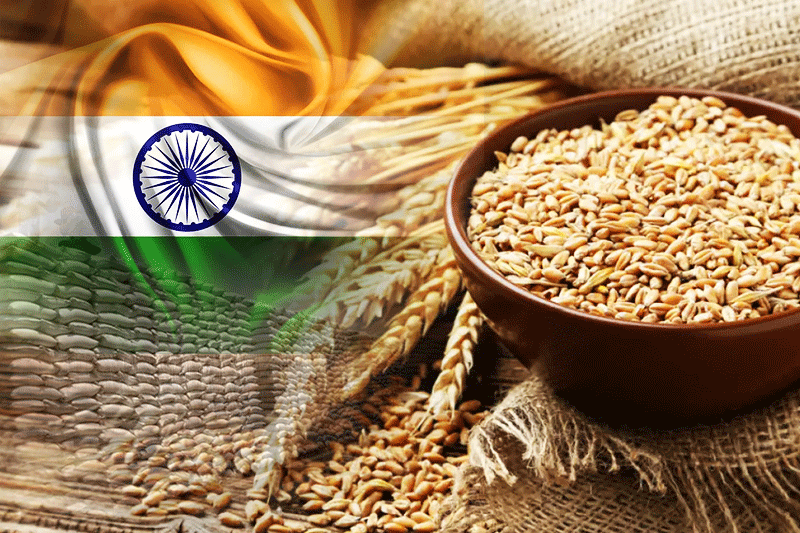
India Anticipates Unprecedented Wheat Harvest in 2024
India’s Ministry of Agriculture has reaffirmed its projection of a record wheat harvest for the 2023/24 agricultural year, estimating production at 115.3 million tons—a 2% increase over the previous year’s 113.3 million tons. This optimistic outlook, announced by Agriculture Minister Shivraj Singh Chouhan on May 12, is attributed to favorable weather conditions and efficient harvesting progress across key wheat-growing states.
Favorable Weather Drives Harvest Success
Unlike previous years, when erratic rainfall and heatwaves disrupted yields, 2024 saw optimal temperatures and timely rains in major wheat-producing regions. The harvest has already been completed in Madhya Pradesh, Haryana, Rajasthan, and Gujarat, while Punjab, Uttar Pradesh, and Bihar are in the final stages of collection. According to the Indian Meteorological Department (IMD), the absence of unseasonal heat spikes during the grain-filling stage played a crucial role in boosting yields.
Government Stocks Well Above Targets
As of April 1, India’s wheat reserves in state granaries stood at 11.8 million tons, significantly surpassing the government’s buffer norm of 7.46 million tons. This marks a 4-million-ton increase compared to the same period last year, reinforcing food security and potentially allowing for export relaxations in the coming months.
Global Market Implications
India’s wheat surplus could influence global trade dynamics, especially as other major producers like Russia and Ukraine face logistical and climatic challenges. If India resumes exports—after restrictions imposed in 2022 due to domestic shortages—it could help stabilize prices in import-dependent regions like Africa and Southeast Asia. However, experts caution that domestic inflation control may remain the government’s priority.
India’s record wheat harvest underscores the importance of climate resilience, strategic stockpiling, and policy flexibility in agriculture. While the surplus strengthens food security, its impact on global markets will depend on government decisions regarding exports. For farmers and agronomists, this season serves as a reminder of how favorable weather and adaptive farming techniques can drive exceptional yields.
Error