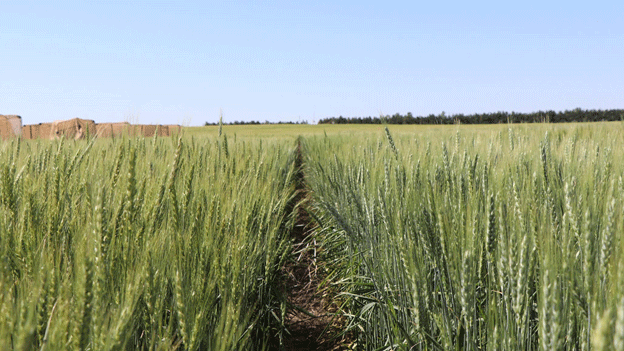
Wheat growers have long anticipated the potential of hybrid wheat to deliver agronomic benefits akin to those observed in hybrid corn and sorghum. Recent developments in this field suggest that hybrid wheat may soon become a viable option for producers seeking higher yields and greater resilience.
Corteva’s Breakthrough in Hybrid Wheat Technology
In November 2024, Corteva Agriscience announced a significant advancement in hybrid wheat technology. Their proprietary non-GMO hybrid wheat has demonstrated the potential to increase yield potential by 10% while utilizing the same amount of land and resources. Notably, research trials indicate that this hybrid can yield approximately 20% higher than elite varieties under water-stressed conditions, addressing a critical need for drought-resistant crops in the face of climate change
Corteva plans to introduce hybrid hard red winter wheat to the North American market as early as 2027, aiming to provide farmers with access to these enhanced varieties.
Challenges in Hybrid Wheat Development
Despite these promising advancements, the commercialization of hybrid wheat has historically faced obstacles due to the complexity and cost of breeding hybrids. Wheat’s self-pollinating nature necessitates intricate methods to prevent self-fertilization, often involving expensive genetic or chemical approaches. Amanda Easterly, a research associate professor at the University of Nebraska-Lincoln High Plains Ag Lab, explains that wheat’s floral structure complicates hybridization efforts, making large-scale production challenging.
Previous initiatives by companies such as Bayer, BASF, and Syngenta have encountered economic hurdles, leading some programs to scale back or discontinue their hybrid wheat development efforts. For instance, BASF discontinued its North American hybrid wheat breeding program in 2023 due to high breeding costs.
The Role of Heterosis in Hybrid Wheat
The success of hybrid wheat largely depends on harnessing heterosis, where hybrid offspring exhibit superior performance compared to their parent varieties. However, the genetic similarities among existing wheat varieties can limit the expression of heterosis. Easterly notes that close genetic relationships within wheat market classes may constrain the degree of heterosis observed, posing a challenge for breeders aiming to develop hybrids with significant yield advantages.
Scaling Up Hybrid Seed Production
Producing hybrid wheat seeds at a commercial scale remains a significant hurdle. While researchers can evaluate hybrids with minimal seed quantities, large-scale farming requires substantial seed production, increasing costs for both developers and growers. Demonstrating a consistent yield advantage over conventional wheat is essential for hybrid wheat to gain widespread adoption among farmers.
Advancements in hybrid wheat research, exemplified by Corteva’s recent breakthrough, offer promising avenues for enhancing wheat yields and resilience. While challenges persist in breeding complexity and seed production scalability, continued public and private investment in hybrid wheat development is crucial. These efforts aim to provide farmers with robust, high-yielding varieties capable of meeting the demands of a changing climate and contributing to global food security.
Error