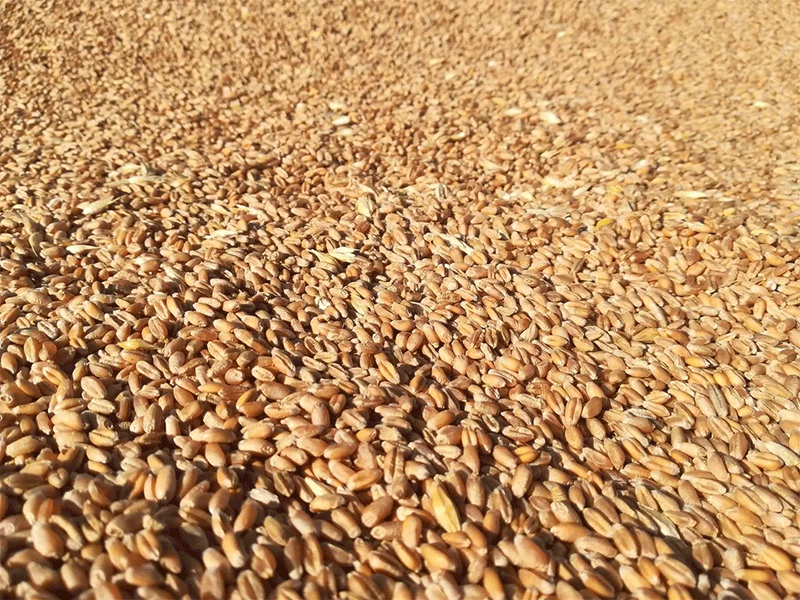
Russian wheat exporters must prepare for a tougher trade environment in 2025/26, warns Alena Shatkova, head of the analytical department at Agroexport, a Russian federal agricultural trade center. Speaking at the AGRO-2025 exhibition, she highlighted growing challenges in Africa, the Middle East, and Asia due to rebounding production in rival exporting nations.
Key Competitive Threats
- EU Wheat Recovery – After a weaker 2024 season, the EU is expected to increase wheat exports to 32.5 million tons (up from 26.5 million tons last year), reclaiming markets like Morocco and Algeria.
- Ukrainian Wheat Redirection – With the end of EU trade preferences, Ukrainian wheat may flood alternative markets, undercutting Russian prices.
- Southern Hemisphere Surge – Australia (forecasted 28 million tons, up from 23 million tons) and Argentina (13 million tons, up from 11 million tons) will add supply pressure in late 2025.
Demand Shifts: Opportunities Amid Challenges
While competition grows, demand is rebounding in key regions:
- Asia: China and Indonesia are expected to increase imports after a slump in 2024.
- Middle East: Turkey, facing poor harvests, may import 7.5 million tons (up from 2024’s import ban).
- Africa: Steady demand in Egypt, Algeria, and Nigeria, with growth in Sub-Saharan Africa (Kenya, Tanzania).
Russia’s Export Performance
Despite a dip from the record 54.1 million tons in 2023/24, Russia exported 43.5 million tons of wheat last season, retaining dominance in:
- Egypt (world’s top importer)
- Bangladesh, Turkey, Saudi Arabia (key wheat buyers)
- Iran (major barley market)
Navigating the New Grain Landscape
Russian exporters must adapt to fiercer competition by optimizing logistics, securing long-term contracts, and diversifying beyond traditional markets. While EU and Southern Hemisphere rivals rebound, demand in Asia and Africa offers opportunities—if Russia can maintain its cost and quality advantage.
Error