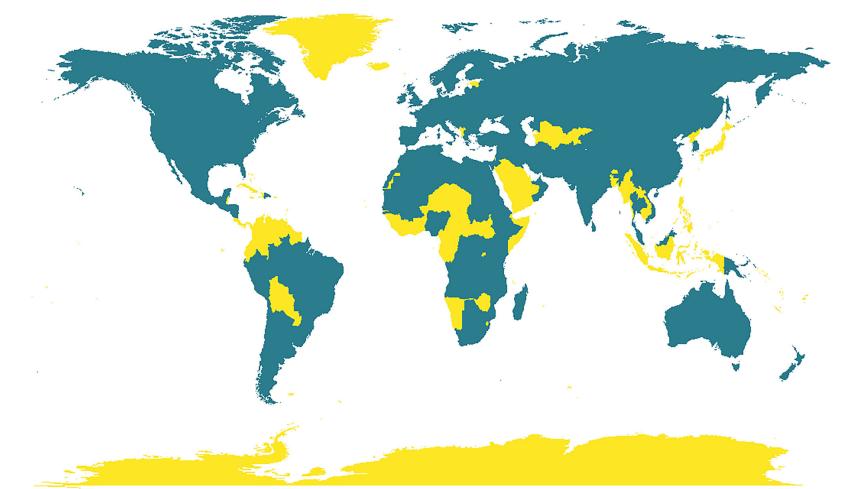
Durum wheat (Triticum turgidum ssp. durum) is an important food crop with a global production of over 33 million metric tons annually (Martínez-Moreno et al., 2022; Sall et al., 2019). Although durum wheat production has historically been in the Mediterranean Basin, it has spread to Canada, the United States, Mexico, Russia, Kazakhstan, Azerbaijan, India, Argentina, Chile, Ethiopia, and other countries globally. Durum wheat cultivation area has grown from 8.41 Mha in 1800 to 13.52 Mha in 2020 . Durum is mainly used to make pasta products, but it also holds significance in various regions of Africa, the Middle East, and Central Asia for producing local cuisine, such as defo/dabo (bread), injera (flat pancake bread), porridge, kita (flat steamed bread), kinche (boiled coarse grain), couscous, bulgur, and other semolinabased products. Currently, the world population is growing at a rapid pace and is expected to reach 9 billion by 2050. This population surge, coupled with the anticipated reduction in available land for food production, necessitates a swift increase in crop yields to meet this rising demand. Concurrently, the escalation of abiotic stresses due to the changing climate, alongside increasing and evolving pathogen pressures, is impacting global wheat production, calling for innovative resilience strategies to ensure food security. The predictability of climate variables varies, with alterations in CO2 levels and temperature fluctuations being more predictable than changes in rainfall patterns. However, predicting pathogen shifts is exceedingly challenging due to their ability to migrate between continents and adapt to a wide range of climate conditions. Wheat domestication and selection led to fixing a number of yieldrelated traits decreasing general genetic diversity. Currently, landraces and wheat wild relatives are used as a source of genetic diversity for modern durum wheat improvement to increase the pool of beneficial alleles for many traits, such as disease resistance, available to breeding programs.
Addressing these challenges requires global-scale and multidisciplinary collaborations, including wheat growers, scientists, and breeders. Global collaborations are facilitated by organizations such as the International Maize and Wheat Improvement Center (CIMMYT), the International Center for Agricultural Research in the Dry Areas (ICARDA), the Wheat Initiative, and scientific cohorts such as the International Durum Wheat Genome Sequencing consortium and International Wheat Genome Sequencing Consortium (IWGSC). Specifically in durum wheat, the Expert Working Group (EWG) on Durum Wheat Genomics and Breeding, which is part of the Wheat Initiative, plays a key role in establishing collaborations and providing the wheat community with genomic resources such as two collaborative germplasm collections: the Global Durum Panel (GDP) and Tetraploid Wheat Global Collection . Such initiatives accelerate progress in wheat research and innovation by facilitating knowledge sharing, promoting technology transfer, and enhancing collaboration on a global scale by bringing together expertise and resources from diverse stakeholders.
Reference: Peters Haugrud, A. R., Achilli, A. L., Martínez-Peña, R., & Klymiuk, V. (2024). Future of durum wheat research and breeding: Insights from early career researchers. The Plant Genome, e20453. https://doi.org/10.1002/tpg2.20453
Error