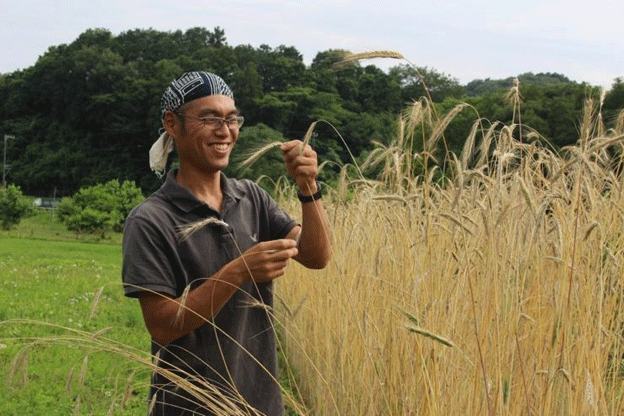
In a time when environmental consciousness is at the forefront, the Kawagoe and Hiki regions in Japan have produced an exemplary innovation: biodegradable rye straws. A collaborative effort between an organic farmer, a café owner, and a candle artist has turned rye stems into eco-friendly straws that align perfectly with the principles of sustainability.
The Concept of “Field to Field”
The rye straw product, branded under the theme “From Field to Field,” not only replaces conventional plastic straws but also offers significant environmental benefits:
- Reusable and Biodegradable: The rye straws can be washed and reused several times. Once they deteriorate, they can be composted, enriching the soil instead of polluting landfills.
- Waste Minimization: Offcuts from the manufacturing process serve as organic fertilizer or are repurposed by local artists to create Nordic-inspired decorations like Himmeli or for use in candle-making.
This zero-waste initiative is a testament to the potential of sustainable design, where agricultural by-products are transformed into valuable commodities.
Collaboration and Production Goals
The project unites stakeholders from diverse backgrounds:
- Okumusashi Marche Café in Ogose Town spearheaded the product development.
- Seikou Udoku, an organic farm, provided the raw materials.
- Tomosibi, a candle artist, contributed by creatively using manufacturing by-products.
In 2023, these straws were marketed primarily as gifts, with irregularly shaped straws distributed as samples to local eateries. For 2024, the team aims to scale up production to 10,000 straws, with plans to expand into wholesale distribution for restaurants and cafes.
Rye Straw Advantages Over Plastic
Plastic straws, a major pollutant, often persist in the environment for centuries. In contrast, rye straws decompose naturally, reducing the ecological footprint of their usage. Moreover, their aesthetic appeal and robust structure make them suitable for a variety of beverages, offering an elegant and practical alternative for eco-conscious consumers.
The Global Context of Biodegradable Alternatives
The growing global demand for sustainable products underscores the importance of such innovations. Japan’s focus on localized, small-scale agricultural initiatives aligns with international trends to reduce plastic waste and foster eco-friendly materials. Rye, with its sturdy stem and rapid decomposition, could become a model crop for similar initiatives worldwide.
The rye straw project from the Kawagoe and Hiki regions illustrates how community collaboration and sustainable practices can address modern environmental challenges. By transforming agricultural by-products into functional, eco-friendly goods, this initiative not only reduces waste but also fosters economic opportunities for rural communities. As production expands, the project could inspire similar models in other regions, contributing to a greener future.
Error