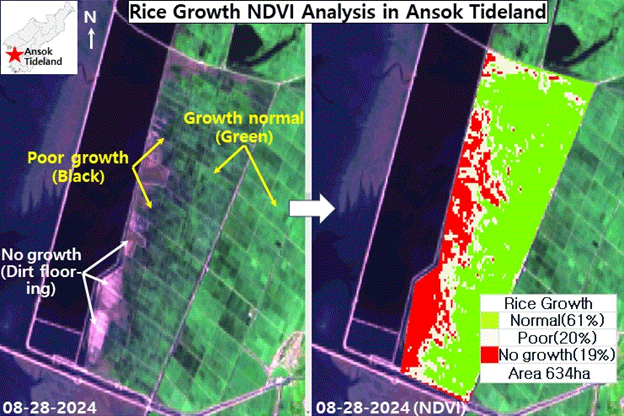
The aftermath of Typhoon Khanun in August 2023 left a significant mark on North Korea’s agricultural landscape, particularly in the reclaimed rice fields of Ansok Tideland, located in Onchon county, South Pyongan province. After the typhoon breached the dikes and seawater flooded 270 hectares of farmland, North Korea hurried to repair the damage in an effort to salvage the year’s rice crop. However, recent satellite imagery and agricultural analysis suggest that these rushed efforts have not fully paid off, with rice production expected to fall far below expectations.
A Struggle to Recover from Flooding
The flooding of Ansok Tideland, part of North Korea’s broader “Find New Land Campaign” aimed at increasing agricultural land, was a severe blow to the country’s food security initiatives. In a dramatic response, Kim Jong Un personally visited the site, reportedly chastising officials for the failure to protect the reclaimed land. North Korea quickly repaired around 100 meters of the damaged dikes and pumped out the seawater, with efforts made to desalinate the soil to enable planting for the 2024 rice season.
Despite these efforts, recent satellite imagery from NASA’s Landsat-9 reveals that rice growth in the region is significantly below expectations. The imagery, analyzed using the Normalized Difference Vegetation Index (NDVI), shows that only 61% of the 634 hectares of farmland in Ansok Tideland are experiencing normal rice growth. The remaining fields are either barren (19%) or exhibiting stunted growth (20%), with the damaged areas unlikely to produce any meaningful yield this fall.
Impact of Poor Rice Growth on Yields
The poor performance of the rice fields in Ansok Tideland is expected to result in a 30-40% reduction in yield, a critical shortfall for the region’s farmers and the country’s overall agricultural output. Satellite analysis shows that many of the affected fields have either failed to establish rice seedlings or have suffered from severe stunting. The NDVI analysis indicates that healthy rice growth is concentrated in only 388 hectares, while 118 hectares show no rice growth at all, and another 128 hectares are projected to produce less than half their normal yield.
This drop in production could be a setback for North Korea, as the country relies heavily on its reclaimed tidelands to expand its arable land and boost food production. Ansok Tideland is one of the critical areas within this strategy, and the diminished output from this region will likely put additional strain on the country’s ability to meet its food security goals.
Broader Agricultural Outlook for North Korea
Despite the localized challenges in Ansok Tideland, North Korea’s overall harvest projections remain relatively stable. The United States Department of Agriculture (USDA) recently predicted that North Korea’s rice harvest for the 2024/25 marketing year will be 8% higher than the 2022 harvest but still 1% below the average of the past five years. This is largely due to favorable conditions in other parts of the country, where adequate rainfall and consistent climate conditions have supported crop growth.
However, concerns remain for the fall harvest. The USDA has forecasted above-average temperatures and more frequent rains in September and October, potentially impacting the harvest in some areas. North Korean agriculture remains highly vulnerable to weather extremes, and additional typhoons or flooding could exacerbate the issues already seen in regions like Ansok Tideland.
The poor rice harvest in Ansok Tideland highlights the vulnerability of North Korea’s agricultural expansion efforts, particularly in reclaimed tideland areas. While the country was quick to repair damage from Typhoon Khanun, the lingering effects of seawater flooding and incomplete desalination have left a significant portion of the fields barren or producing at suboptimal levels. With yields expected to be 30-40% below target, the Ansok Tideland case underscores the importance of long-term planning and proper soil recovery after flooding. While North Korea’s overall harvest projections remain stable, regions like Ansok will need continued attention to ensure sustainable agricultural practices and improved resilience to future natural disasters.
Error