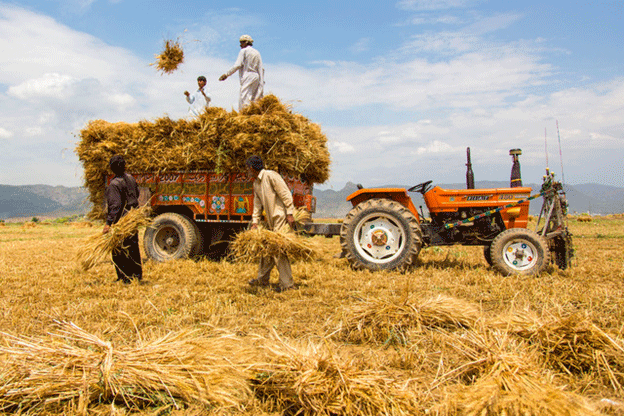
Pakistan’s agricultural sector faces one of its toughest years, with farmers bearing the brunt of escalating input costs, stagnant crop prices, and a lack of government intervention. The Kissan Ittehad, a leading farmers’ union, has issued a stern warning to the Punjab and federal governments: act now or face a massive protest march in Islamabad.
At the heart of the issue lies the government’s delay in announcing minimum support prices (MSP) for critical crops like wheat and sugarcane. Khalid Hussain, Central Chairman of Kissan Ittehad, emphasized the need for immediate action to prevent further financial losses to farmers.
Farmers’ Demands and Challenges
- Wheat Support Price Increase:
Farmers demand that the MSP for wheat be set at PKR 5,000 per 40 kilograms, a significant increase from current rates, to offset rising production costs. - Sugarcane Price Discrepancies:
Despite an agreement for sugar mills to purchase sugarcane at PKR 400 per maund, mills are reportedly paying only PKR 300-325 per maund, leaving farmers with substantial losses. - Soaring Input Costs:
- Electricity for Tube Wells: Prices have surged dramatically, impacting irrigation costs.
- Irrigation Water: Costs have increased from PKR 300 to PKR 5,000 per hour, creating an unsustainable burden for farmers.
- Fertilizer Shortages: Black market activities have driven up the price of urea fertilizer, further squeezing profit margins.
- Lack of Subsidies:
Government reluctance to reintroduce essential subsidies, attributed to IMF policies promoting a free-market economy, has left farmers vulnerable to exploitative market conditions.
Impact on the Agricultural Sector
2024 has highlighted systemic issues within Pakistan’s agricultural framework, including weak regulation of flour and sugar mills, inefficient subsidy management, and delayed policy decisions. These challenges have intensified financial pressures on farmers, who contribute significantly to the nation’s economy.
The delay in MSP announcements has created uncertainty, discouraging farmers from investing in upcoming planting seasons. Additionally, the lack of access to quality seeds and affordable irrigation solutions further hampers productivity.
Kissan Ittehad’s Proposed Protest
If the government fails to meet these demands, Kissan Ittehad leaders have vowed to organize a nationwide protest march to Islamabad, potentially disrupting daily life in the capital. Farmers from across Pakistan plan to stage a sit-in until their demands are met, amplifying the urgency of the crisis.
The crisis in Pakistan’s agricultural sector demands immediate attention. Rising input costs, delayed policy interventions, and market exploitation are eroding farmers’ livelihoods and threatening the country’s food security. Addressing farmers’ demands for fair pricing, input cost control, and critical subsidies is essential to stabilize the sector and restore confidence in agricultural governance.
The government must act decisively to prevent the escalation of unrest, ensuring that farmers receive the support they need to sustain their livelihoods and contribute to national economic stability.
Error