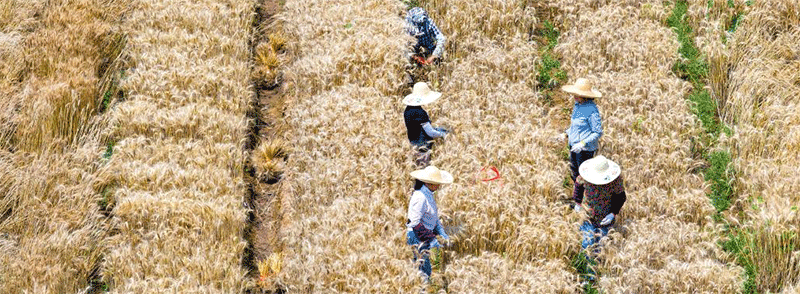
The 2025 winter wheat harvest is well underway across China, with key producing regions like Shandong and Jiangsu provinces leading the effort. According to China’s Ministry of Agriculture and Rural Affairs, the harvest is progressing smoothly, supported by favorable weather conditions and advanced farming technologies.
Recent reports indicate that China’s wheat production is expected to remain stable at around 137 million metric tons in 2025, maintaining its position as the world’s largest wheat producer (FAO, 2025). However, challenges such as rising input costs, labor shortages, and climate variability continue to pressure yields.
Technology and Research Driving Efficiency
Innovations in agricultural machinery, precision farming, and high-yield wheat varieties are playing a crucial role in this year’s harvest. In Jiangsu, researchers from the Jiangsu Academy of Agricultural Sciences are testing drought-resistant wheat strains, aiming to enhance resilience against erratic rainfall patterns.
Drones and satellite monitoring are also being widely adopted, allowing farmers to optimize irrigation and detect pest outbreaks early. A 2025 report by the International Food Policy Research Institute (IFPRI) highlights that such technologies could boost China’s wheat productivity by 10-15% over the next decade.
Global Market Implications
China’s wheat output has significant repercussions for global food security, particularly as extreme weather disrupts production in other major exporters like the EU and Australia. Analysts from Rabobank predict that China may increase wheat imports slightly in 2025 to supplement domestic reserves, keeping global prices volatile.
The 2025 winter wheat harvest in China underscores the importance of sustainable farming practices and technological adoption in ensuring stable food supplies. While production remains robust, long-term challenges like climate change and resource limitations require continued innovation and policy support. Collaboration between farmers, scientists, and policymakers will be key to securing future harvests.
Error