The strategic partnership between Pakistan and the International Maize and Wheat Improvement Center (CIMMYT) is entering a new, nutrition-focused phase. During a recent high-level meeting, Pakistan’s Minister for National Food Security, Rana Tanveer Hussain, and CIMMYT Pakistan representative Dr. Sajid Ali reviewed progress on a transformative agricultural goal: combating hidden hunger through biofortified wheat. This initiative builds upon a historic collaboration that began with the Green Revolution of the 1960s, which saw Pakistan among the first nations to adopt Dr. Norman Borlaug’s high-yielding, semi-dwarf wheat varieties to overcome famine.
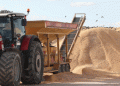
The scale of CIMMYT’s impact on Pakistani agriculture is monumental. Dr. Sajid Ali presented data revealing that in the last decade alone (2015-2025), approximately 70 improved wheat varieties have been developed for the country, with a staggering 90% derived from advanced CIMMYT germplasm. Today, these innovations form the bedrock of Pakistan’s food system, covering nearly 90% of the nation’s 9 million hectares of wheat farmland. This vast acreage produces the staple food for over 250 million people, underscoring the critical role of genetic improvement in national security.
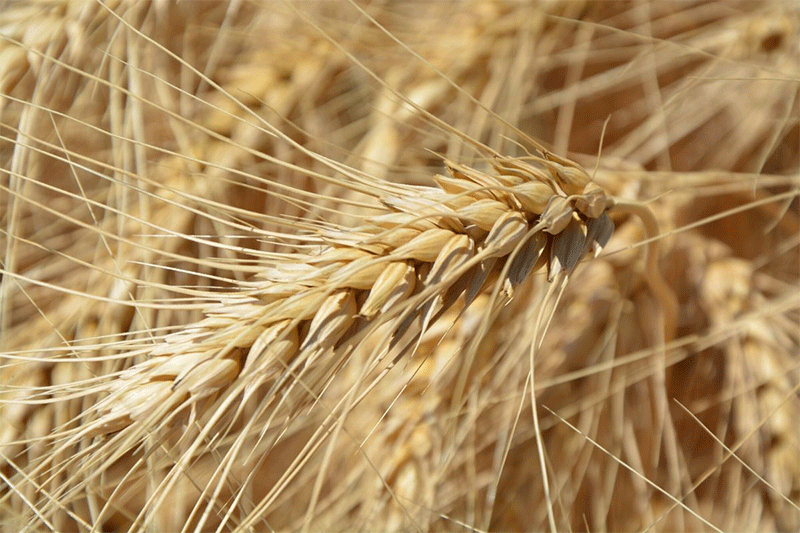
The latest generation of these varieties moves beyond traditional agronomic traits. While maintaining high yield potential and resistance to devastating diseases like rust, they are biofortified—deliberately bred to have higher concentrations of essential micronutrients. This addresses a silent crisis: micronutrient deficiency, or “hidden hunger.” The World Health Organization (WHO) estimates that over 2 billion people globally suffer from deficiencies in iron and zinc, leading to impaired cognitive development, weakened immunity, and anemia. By integrating iron and zinc directly into the primary food source, biofortification offers a sustainable, scalable solution.
This strategy aligns with global research demonstrating the efficacy of biofortified crops. A 2023 meta-analysis in Nature Food concluded that biofortification through conventional breeding is a cost-effective and widely accessible intervention to improve nutritional outcomes, particularly in rural populations. The focus on zinc is especially pertinent; research from the HarvestPlus program indicates that zinc-biofortified wheat can significantly increase daily zinc absorption in women and children, a key demographic affected by deficiency.
The Pakistani government’s strong support, reiterated by Minister Hussain, is crucial for the adoption of these innovative varieties. The upcoming visit of CIMMYT Director General Dr. Bram Govaerts in September 2025 signals a continued commitment to this partnership, aiming to further integrate advanced varieties and climate-resilient practices into Pakistan’s agricultural framework.
Pakistan’s agricultural journey, from achieving calorie sufficiency through the Green Revolution to now targeting nutritional quality via biofortification, represents a mature and evolving model of food security. The successful integration of “iron” and “zinc” wheat on a national scale demonstrates a powerful synergy between international agricultural research and national policy. For farmers, agronomists, and scientists, this shift underscores that future gains in agriculture will be measured not only in tons per hectare but also in the nutrient density of those tons, offering a path to healthier populations and more resilient food systems.
Error