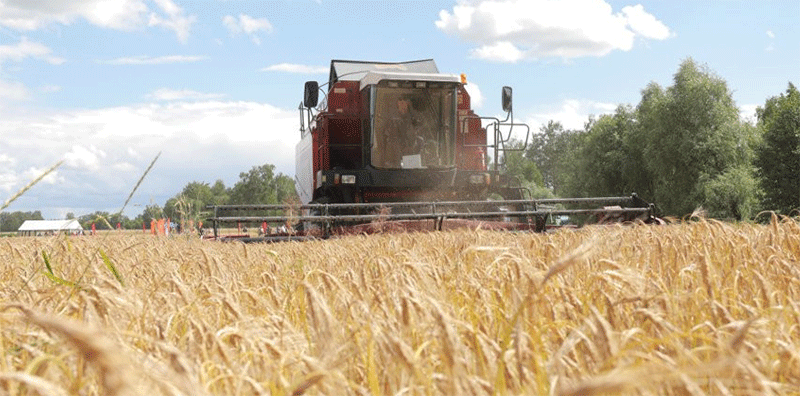
The Republic of Belarus is demonstrating formidable agricultural productivity in the 2025 season, with the national harvest rapidly approaching the significant threshold of 9 million tons. According to an operational report from the Ministry of Agriculture and Food, as of September 10th, 8.967 million tons of grain (including rapeseed) have been threshed. This impressive volume underscores a season of high yields and efficient field operations across the country’s six regions.
The regional contributions paint a picture of widespread success:
- Minsk Oblast: 2,239 thousand tons
- Grodno Oblast: 1,741 thousand tons
- Brest Oblast: 1,682 thousand tons
- Mogilev Oblast: 1,255 thousand tons
- Gomel Oblast: 1,048 thousand tons
- Vitebsk Oblast: 1,002 thousand tons
A key driver of this high output is a substantial increase in average yield. The reported average grain yield stands at 8.3 centners per hectare higher than the previous year’s level. This increase is a testament to favorable growing conditions and effective agronomic management. Furthermore, the harvest of grain and leguminous crops (excluding corn) is virtually complete, having been harvested from 98% of the planned 2.376 million hectares.
Beyond the grain sector, the harvest data reveals strong performance across multiple agricultural domains:
- Sugar Beet: Early digging shows a promising average yield of 475 c/ha, a significant increase of 40.8 c/ha from the previous year.
- Potato: The potato harvest is also showing elevated yields, averaging 347.5 c/ha, which is 36 c/ha higher than in 2024.
- Flax: The fibre flax sector is thriving, with a tresta yield of 46 c/ha, up 11.6 c/ha year-on-year.
- Forage Production: The foundation for livestock nutrition is secure, with excellent progress in forage conservation. Notably, 95% of the silage target has been met, with 13.244 million tons already secured.
Concurrent with the harvest, the critical work of establishing the 2026 crop has begun. Farmers have already sown winter grains on 190,000 hectares, achieving 13% of the planned area. Additionally, the state procurement system is functioning effectively, with 653,000 tons (93%) of food-grade grain already delivered against the state order.
The 2025 harvest season in Belarus is shaping up to be exceptionally productive. The near-completion of the grain harvest with significantly elevated yields, coupled with strong showings in industrial and forage crops, indicates a highly successful national agricultural campaign. The concurrent high progress in forage conservation and the timely sowing of winter cereals ensure both current economic stability and preparedness for the next production cycle. This data reflects a resilient and efficient agricultural sector capable of leveraging favorable conditions to ensure strong national food security and contribute significantly to the economy.
Error