

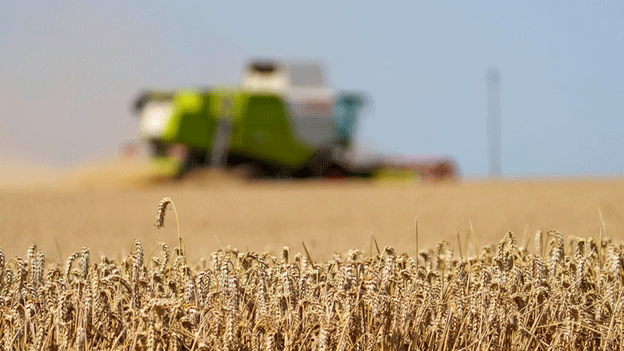
Wheat, a staple crop for both human consumption and animal feed, has traditionally been grown on nearly half of NRW’s arable land. However, the heavy rains during the critical sowing period of October and November 2023 created waterlogged fields, making them inaccessible for machinery and preventing the timely planting of winter wheat. Malte Wichern, an expert from the Chamber of Agriculture NRW, noted that the persistent wet conditions forced many farmers to reconsider their crop choices for the season.
This weather-induced disruption is a clear example of how climate variability is increasingly affecting agricultural practices. The reduction in wheat acreage highlights the challenges farmers face in maintaining crop yields amidst changing environmental conditions.
Shifting to Alternative Crops: The Rise of Maize
In response to the difficulties encountered with wheat planting, many farmers turned to maize as an alternative crop. Maize, which is planted in the spring, offers greater flexibility in sowing time, allowing farmers to adapt more easily to weather conditions. This crop shift not only reflects an immediate response to unfavorable conditions but also indicates a broader trend of diversifying crop rotations to mitigate risks associated with climate change.
Maize is particularly well-suited to the changing climate patterns in NRW, as it can thrive in warmer and slightly wetter conditions compared to wheat. Additionally, maize is a versatile crop used in animal feed, bioenergy production, and food products, making it an attractive option for farmers looking to maintain economic stability in uncertain weather scenarios.
The Broader Implications for Agriculture
The decrease in wheat cultivation in NRW is part of a larger pattern observed across Europe, where farmers are increasingly adjusting their practices to cope with unpredictable weather. The reliance on traditional crop patterns is being challenged, leading to a reevaluation of agricultural strategies that prioritize resilience and adaptability.
This trend also raises important questions about food security and market dynamics. A reduction in wheat production could lead to higher prices and increased dependency on imports, particularly if such weather conditions persist or become more common. Farmers, agronomists, and agricultural engineers must now work together to develop and implement innovative farming practices that can better withstand these climatic challenges.
The reduction in wheat cultivation in North Rhine-Westphalia serves as a stark reminder of the impact of climate change on agriculture. As farmers adapt to these new realities, the agricultural community must continue to explore and adopt alternative crops and practices that ensure sustainability and food security. The shift towards maize and other flexible crops is likely to become more common, as resilience becomes the key focus in farming strategies.
Error


