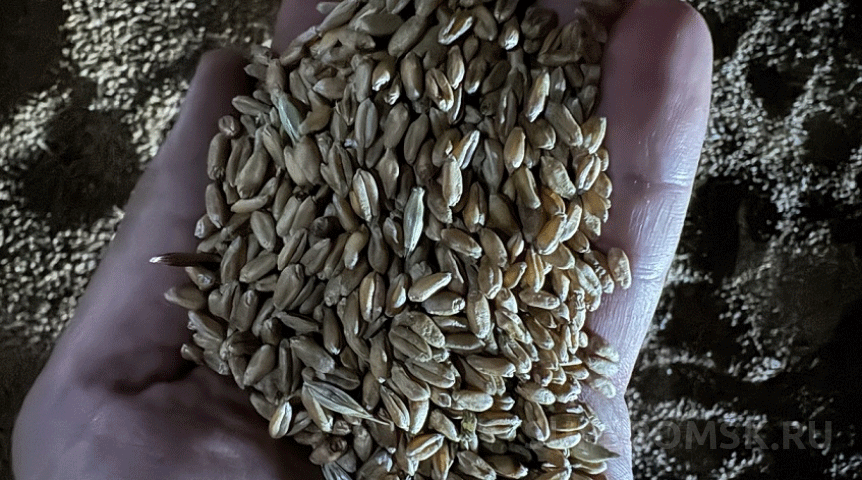
In a recent case underscoring the zero-tolerance standards of grain phytosanitary controls, specialists from the Omsk branch of Russia’s Federal Center for Agricultural Product Quality and Safety (FGBU “TsOK APK”) detected a significant contamination. During routine inspection in December 2025, a single specimen of the Lesser Mealworm beetle (Alphitobius diaperinus) was found in a one-kilogram sample drawn from a 2,000-tonne lot of wheat. Despite the seemingly minimal find—one insect per 2,000 metric tons—the discovery triggered a major regulatory response. Under the Eurasian Economic Union’s Technical Regulations (TR CU 015/2011 “On Grain Safety”), the presence of live stored grain pests in commercial lots is categorically prohibited, rendering the entire batch non-compliant. Information was immediately entered into the federal “Vesta” automated monitoring system and forwarded to the Omsk regional office of Rosselkohznadzor (the Russian veterinary and phytosanitary service) for enforcement action.
The Lesser Mealworm is far from a minor nuisance. As a beetle of the Tenebrionidae family, it is a formidable secondary pest of stored products. Both adults and larvae cause direct damage by feeding on grain, flour, and processed goods, leading to weight loss, heating, and mold growth. More critically, infestation imparts a persistent, unpleasant phenolic odor (from secretions containing compounds like cresol) that can taint products for up to eight months, destroying market value. Flour milled from infested grain becomes lumpy and unpalatable, unfit for human or animal consumption. The economic threat is substantial; according to the UN Food and Agriculture Organization (FAO), post-harvest losses from insects, molds, and rodents can exceed 20% in some regions, with beetles like Alphitobius diaperinus and the closely related Tribolium species (flour beetles) being primary contributors. This detection in Omsk highlights the pervasive risk pathway: initial field infestation can occur from crop residues, with populations exploding under poor storage conditions (e.g., temperatures above 20°C and grain moisture above 14%). The incident underscores that effective pest management is a continuous chain from harvest through storage and transport, requiring integrated strategies including sanitation, grain cooling, aeration, and targeted insecticide/fumigation protocols.
The identification of a single Lesser Mealworm in a massive wheat shipment serves as a powerful reminder of the stringent biosecurity standards governing global grain trade and the severe consequences of lapses. For farmers and storage operators, it emphasizes that pest control is not merely about preventing visible damage but about maintaining absolute phytosanitary purity to preserve market access and value. This zero-tolerance reality necessitates a proactive, science-based approach to stored grain management, investing in proper drying, regular monitoring, and certified storage protocols. Ultimately, the cost of prevention through robust integrated pest management (IPM) is dwarfed by the financial loss of having an entire shipment condemned—a risk quantified not by the number of beetles found, but by the thousands of tonnes deemed unsaleable.
Error