Reduced corn yield at field edges is a common problem caused by several factors, including insect infestation, herbicide drift, and soil compaction. This article examines the role of wind, heat and drought in exacerbating crop losses along the field perimeter.
Corn yields often decline at the edges of fields, a phenomenon due to various environmental and agronomic factors.
Key factors influencing additional profitability
- Insect populations and herbicide distribution:
o Insects tend to migrate from fence rows to field edges, causing localized damage.
o Carryover of herbicides from neighboring fields can negatively affect crop health, although this is not always the main factor. - Soil compaction:
o End rows near field edges are subject to heavy traffic during harvest, resulting in soil compaction and poor root development.
The role of wind, heat and drought
Exposure to wind. Field edges, especially those adjacent to roads or shorter crops such as soybeans, are more susceptible to wind. Such impacts can significantly change the microclimate around crops.
Heat and drought stress:
- Higher temperatures increase crop water requirements by increasing the vapor pressure deficit (VPD) between the interior of the leaf and the surrounding air. VPD measures the difference between the potential water-holding capacity of air and its actual water content.
- As temperature increases, VPD increases exponentially, resulting in increased water loss in the plant. For example, increasing temperature from 80°F (27°C) to 95°F (35°C) doubles water demand (Lobell et al., 2013).
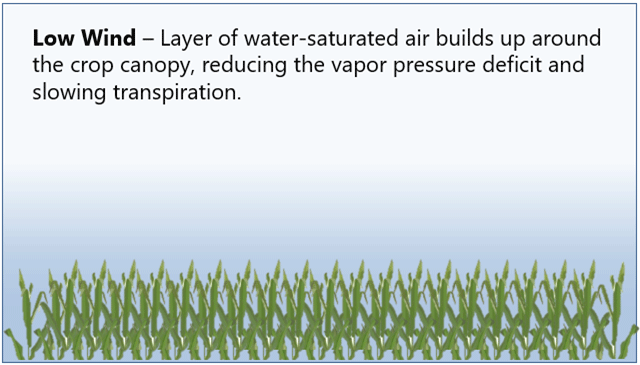
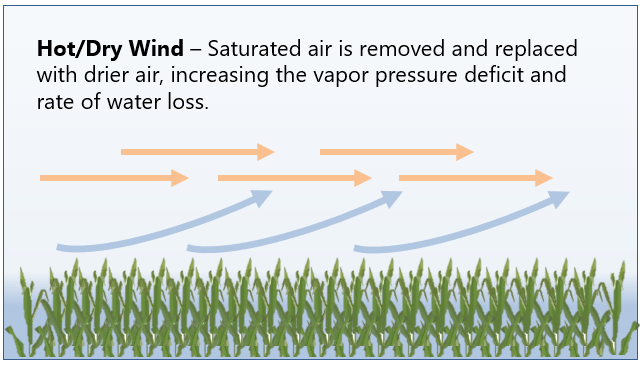
Wind and air pressure: - Wind accelerates the removal of the layer of moist air around the leaves, replacing it with drier air and increasing the air pressure. This increases water loss and stress to the plant (Allen et al., 1998).
- The figure shows how wind removes a layer of saturated air around plants, increasing VPD and evapotranspiration.

Effects on corn plants
Corn plants under high VPD conditions close their stomata to conserve water. This reaction, although necessary, reduces CO2 consumption and slows down photosynthesis, which ultimately reduces crop yields. In addition, soil moisture reserves are depleted more quickly, causing long-term stress.
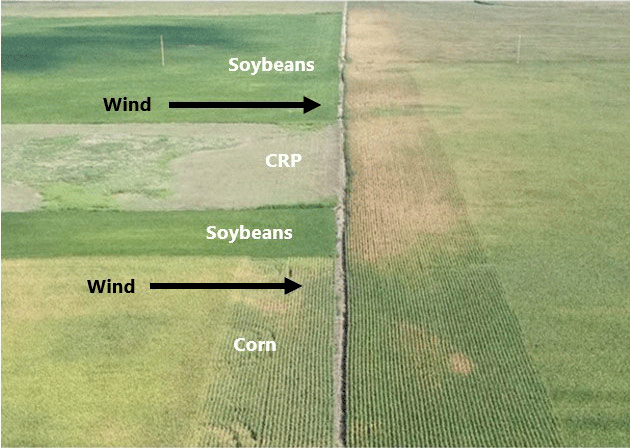
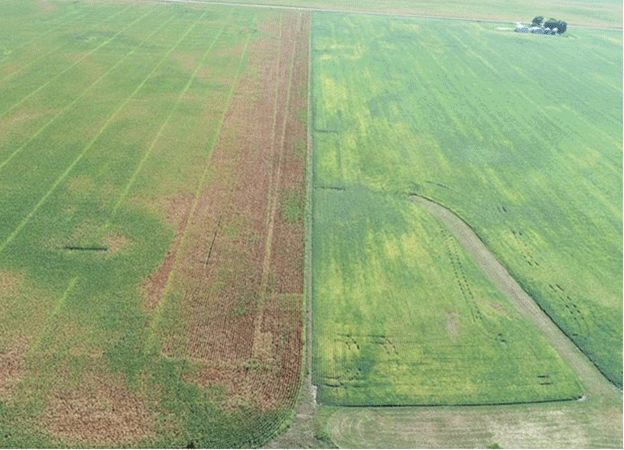
Case Study: Wind Effects on Field Edges
Fields where corn borders soybeans or Conservation Reserve Program (CRP) areas have more severe stress symptoms compared to margins bordering other corn fields. This difference highlights the protective effect of similar canopies against wind stress.