
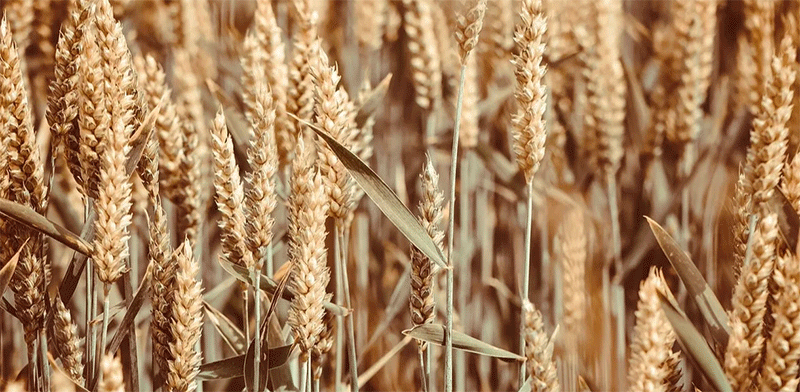
In the face of increasing water scarcity and climate uncertainty, a new wheat variety named Karan Manjari (DDW 55 (D)) is emerging as a game-changer for Indian agriculture. Developed by Indian agricultural scientists specifically for water-limited environments, this variety demonstrates that high productivity and resource efficiency can go hand-in-hand. With a potential yield of up to 56.5 quintals per hectare under optimal conditions, and a reliable average of 35-36 quintals/hectare under normal circumstances, Karan Manjari is particularly suited for states like Madhya Pradesh, Gujarat, Rajasthan, Chhattisgarh, and the Jhansi region of Uttar Pradesh. Its agronomic management package is designed for minimal input use, requiring only two irrigations and a balanced nutrient strategy, making it an economically viable and environmentally sustainable choice for the Rabi season.
Agronomic Precision for Water and Nutrient Efficiency
The standout feature of Karan Manjari is its radically low water requirement. The recommended irrigation schedule consists of just two applications: one pre-sowing irrigation and a second at the 45-50 day stage. This aligns with critical growth phases, ensuring water is applied when it has the highest impact on yield formation. This “more crop per drop” approach is critical for Indian agriculture, where groundwater tables are declining in many key wheat-growing regions. A 2023 report by the NITI Aayog highlighted that over 50% of India’s districts face water scarcity issues, underscoring the national need for such water-efficient cultivars.
The nutrient management strategy is equally precise. The recommendation of 90:60:40 kg NPK per hectare for limited irrigation zones, with nitrogen split into two applications, ensures efficient nutrient uptake without waste. This precision is vital; research from the Indian Agricultural Research Institute (IARI) indicates that improved nutrient use efficiency in cereals can reduce fertilizer runoff into the environment by 15-20% while maintaining yields. Furthermore, Karan Manjari exhibits robust disease resistance, with research showing only 7% rust incidence, 3% smut, and 11% loose smut, reducing the need for fungicide applications and associated costs. Its high-quality grains, with a 1000-grain weight of approximately 52 grams and high protein content, also ensure better marketability and profitability for farmers.
A Blueprint for Climate-Resilient Wheat Cultivation
The development and promotion of Karan Manjari represent a significant step toward climate-resilient and sustainable wheat production in India. It successfully addresses the triple challenge of water scarcity, rising input costs, and disease pressure. For farmers, it offers a practical path to maintaining profitability in water-stressed environments. For agronomists and agricultural engineers, it serves as a model for developing and managing crops with a focus on input-use efficiency rather than just maximum yield potential.
The success of this variety will depend on effective extension services to ensure farmers adhere to the recommended low-input protocol. Widespread adoption of Karan Manjari could significantly reduce the water footprint of wheat cultivation in water-stressed regions, ensuring food security without exacerbating resource depletion. It stands as a powerful example of how targeted plant breeding and smart agronomy can together create a more sustainable future for agriculture.
Error