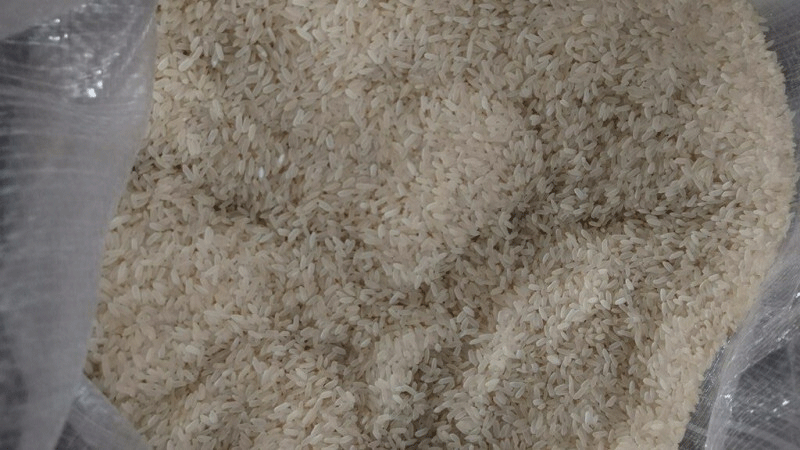
The seamless flow of the global grain trade is a modern marvel, but it hinges on a delicate and non-negotiable principle: biosecurity. A recent incident at the Greater Port of St. Petersburg serves as a critical case study. Russian agricultural quarantine authorities (Rosselkhoznadzor) intercepted and denied entry to a 54-ton shipment of milled rice from Vietnam after live infestation by the Confused Flour Beetle (Tribolium confusum) was confirmed. This event, while a success for border control, highlights the persistent and costly threat that stored product pests pose to food security, farmer profitability, and international trade.
The Intruder: Tribolium confusum and its Economic Impact
The culprit, the Confused Flour Beetle, is a notorious stored product pest. A member of the darkling beetle family, it is a primary and secondary feeder, infesting a wide range of commodities including flour, cereals, bran, and processed grains. According to the UN’s Food and Agriculture Organization (FAO), post-harvest losses to pests like these can account for 10-20% of global cereal production annually, a figure that can be far higher in regions with underdeveloped storage infrastructure.
The detection was made by experts from the St. Petersburg branch of the Federal State Budgetary Institution “Central Agricultural Quality Control Center” (FGBU “TsOK APK”). Their analysis found the shipment violated the Technical Regulations of the Customs Union 021/2011 “On Food Safety,” a key regulatory framework ensuring sanitary standards across member states.
Beyond a Single Shipment: The Systemic Risk
While 54 tons is a manageable quantity to intercept, the implications are vast. An undetected infestation can rapidly escalate, contaminating silos, processing facilities, and transportation networks. The Confused Flour Beetle is particularly resilient; females lay hundreds of eggs directly in foodstuffs, and larvae can survive in processed products, leading to widespread contamination far beyond the original point of entry.
This incident is not isolated. Increasing global trade volumes elevate the risk of transferring invasive species and pests between continents. A 2023 report by the European and Mediterranean Plant Protection Organization (EPPO) emphasized that interceptions of regulated pests in plant consignments remain a significant challenge, requiring continuous vigilance and advanced diagnostic capabilities at ports of entry.
Vigilance is the Price of Secure Trade
The successful interception in St. Petersburg is a testament to the effectiveness of a well-funded and vigilant phytosanitary inspection system. For agronomists, farm owners, and supply chain engineers, it reinforces several critical takeaways:
- The Supply Chain is a Biosecurity Chain: Every transfer point—from farm storage to ship to port—is a potential vulnerability. Protocols for inspection and fumigation must be airtight.
- Global Trade Demands Global Standards: International cooperation and adherence to harmonized phytosanitary standards (like ISPMs from the IPPC) are essential for protecting domestic agriculture from foreign pests.
- Investment in Diagnostics Pays Dividends: Maintaining advanced laboratory facilities at key ports is not an expense but a crucial investment in protecting a nation’s agricultural economy.
For the global agricultural community, this 54-ton rejection is a powerful reminder that the integrity of our food systems depends on constant, scientific vigilance. Protecting our harvests does not end at the farm gate; it continues all the way to the border.
Error