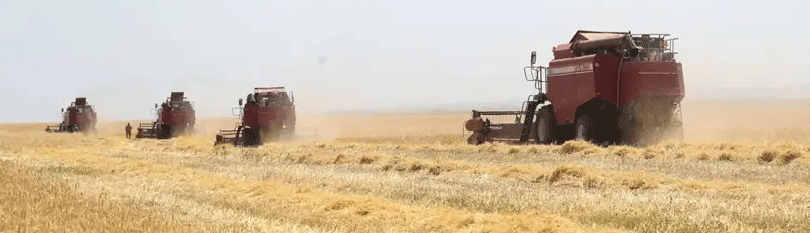
According to Governor Dmitry Milyaev, the agricultural sector in Tula Oblast has reached a significant mid-harvest milestone, combining 1.5 million tons of grain from half of the total sown area for grains and legumes. This update, provided amidst reports of recent adverse weather, offers a crucial snapshot of the region’s progress toward its ambitious 2025 production targets and the concurrent launch of the next agricultural cycle with winter sowing.
Progress Against Target and Weather Resilience
The reported harvest of 1.5 million tons from 50% of the area provides a critical data point for yield estimation. This suggests a current average yield of approximately 3.0 tons per hectare (30 centners/ha) for the harvested area. The governor’s mention of “adverse weather conditions” is a significant factor; persistent rains can delay harvest, promote pre-harvest sprouting, and complicate logistics, leading to potential field losses and quality downgrades.
The return of dry and warm weather, as noted, is essential for mitigating these losses. Timeliness is a critical factor in harvest efficiency. Data from a 2024 global agronomy review highlights that each day of harvest delay under poor conditions can result in field losses of 0.5% to 1.5% for small grains. The ability to “ramp up the pace” of harvesting now is therefore directly tied to preserving the quantity and quality of the remaining crop and achieving the regional target of 2.5 million tons of grain.
Beyond Grains: A Diversified Harvest and Forward Planning
Tula’s agricultural output is not limited to grain. The reported harvest of over 70,000 tons of rapeseed is a strong start toward the oilseed target. Furthermore, the ongoing harvest of potatoes and vegetables represents a high-value sector crucial for local food security.
Simultaneously, the most forward-looking operation is already underway: the sowing of the 2026 crop. The completion of over 20,000 hectares of winter rapeseed and wheat sowing is a positive indicator. Winter rapeseed, in particular, requires a early planting window to establish a robust root system before winter dormancy. This parallel operation—harvesting one crop while sowing the next—demonstrates the high level of logistical coordination and machinery management required on modern farms.
Tula Oblast’s agricultural sector demonstrates resilience and efficiency by reaching the halfway point in its grain harvest despite climatic challenges. The current yield data suggests the region is on a plausible path to meet its grain target, but this is heavily dependent on favorable weather for the remainder of the harvest season to minimize further losses and maintain quality. The successful and timely sowing of winter crops is equally important, as it lays the foundation for next year’s harvest. The key to success lies in this delicate balance: maximizing the output of the current season while strategically investing in the next. For farmers and agronomists in the region, the coming weeks will be a critical period of intense activity, where operational efficiency and favorable weather will determine the final outcome of the 2025 season.
Error