In recent years, Kazakhstan’s agricultural sector has seen a significant shift in crop preferences, with large farms cutting back on wheat cultivation in favor of oilseeds and legumes. One such example is TOO “Sekisovka” in East Kazakhstan, which reduced its wheat area by 1,000 hectares this season, replacing it with soybeans, rapeseed, and peas.
Declining Wheat Production Amid Market Pressures
Globally, wheat prices have been volatile due to geopolitical tensions, export restrictions, and fluctuating demand. According to the FAO’s 2024 report, Kazakhstan—traditionally a major wheat exporter—has seen a 12% decline in wheat planting over the past five years as farmers seek higher-margin crops.
In 2024, “Sekisovka” achieved a record wheat yield of 4.1 tons per hectare, yet economic factors pushed the farm to diversify. The current crop structure includes:
- Soybeans – 472 ha
- Peas – 478 ha
- Rapeseed – 278 ha
- Sunflower – 2,000 ha
- Barley – 650 ha
- Spring wheat – 1,850 ha
Climate Challenges and Agrotechnical Investments
Farmers face increasing climate unpredictability. Valentin Belkov, director of “Sekisovka,” noted that while soil moisture is adequate, lack of rainfall has hindered winter wheat development, leading to a 60-80% reseeding rate for winter crops.
To counter risks, farms are investing in modern agrotechnology:
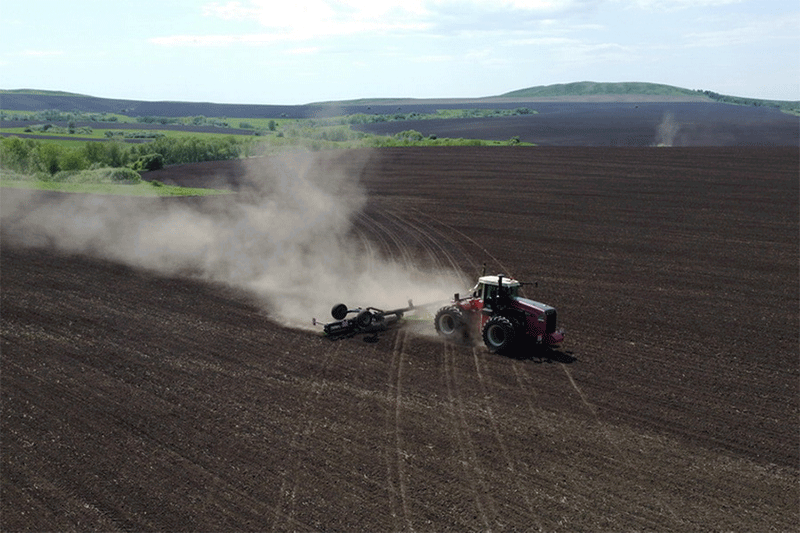
- Precision soil tillage equipment
- High-quality seeds
- Strategic fertilizer application (pre-sowing, in-season, and foliar feeding)
Economic Viability of Crop Diversification
The shift aligns with global trends—rapeseed and soybean demand is rising, driven by biofuel production and livestock feed needs. The World Bank’s 2025 Agribusiness Outlook projects a 7% annual growth in oilseed markets, making them attractive alternatives to wheat.
Kazakh farmers are adapting to market and climatic pressures by diversifying into more profitable crops. While wheat remains a staple, the trend toward oilseeds and legumes reflects a strategic response to global demand and local challenges. Sustainable yields will depend on continued investment in agrotechnology and favorable pricing policies.
Error