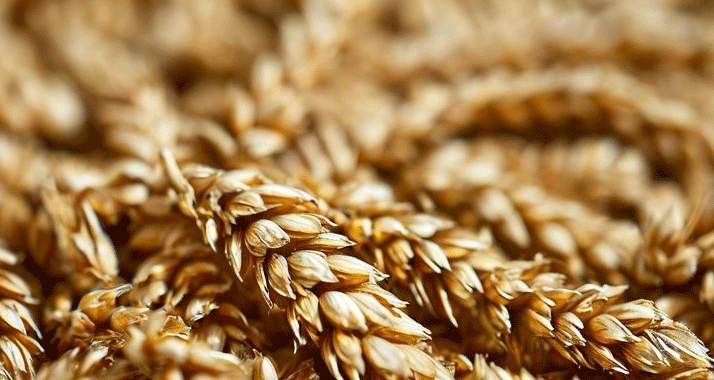
Scientists from Kazan State Agrarian University have introduced a cutting-edge biostimulant technology designed to boost winter wheat yields and stress resistance during critical growth phases. Unlike traditional fertilizers or pesticides, these biostimulants act as “plant vitamins,” helping crops mobilize their natural defenses and optimize nutrient absorption.
Proven Results in Real-World Trials
Field tests conducted in Tatarstan (2021–2023) on popular wheat varieties—Scepter (Skipetr), Marathon (Marafon), and Fotinya—demonstrated significant improvements:
- Marathon wheat saw yields rise from 7.03 to 8.01 tons per hectare—a 14% increase.
- Gluten content improved by up to 4.2%, enhancing grain quality for milling and baking.
- The treatment, applied during heading stages, ensures plants overcome environmental stressors without yield penalties.
Why This Matters for Modern Agriculture
With climate extremes threatening global wheat production, biostimulants offer a sustainable solution to stabilize yields. The Kazan team’s approach is particularly effective because it delivers nutrients via foliar spraying, ensuring rapid absorption when plants need it most.
Broader Implications for Grain Farmers
In Tatarstan, where wheat covers 50% of grain-sown areas, this innovation could significantly impact food security and farm profitability. Similar benefits may extend to other cereals like rye, triticale, and barley, though further research is needed.
The Kazan biostimulant breakthrough represents a low-input, high-reward strategy for enhancing winter wheat resilience and productivity. As global demand for wheat grows, such innovations will be crucial in safeguarding yields against climate stress.
Error