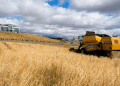

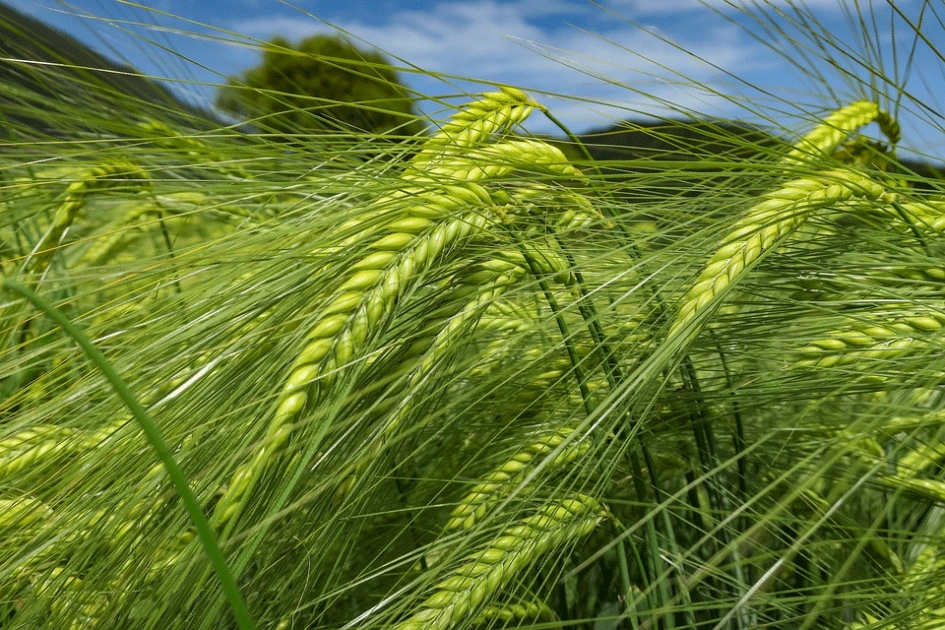
Agricultural innovation is taking center stage in the Lugansk People’s Republic (LPR), where more than 90 domestically developed crop varieties are undergoing rigorous testing at the Slavyanoserbsk Variety Testing Station. Among them, winter wheat and barley varieties from the Donskoy Scientific Center in Russia’s Rostov region are demonstrating remarkable adaptability, even under drought conditions in late 2024 and early 2025.
High-Performance Wheat Varieties Under Evaluation
Key winter wheat varieties being tested include:
- Vasilich
- Ermak
- Lidiya
- Podarok Krymu
- Yubiley Dona
- Shef
Of these, Yubiley Dona has emerged as a standout, showing strong tillering and early heading despite water stress. Registered in Russia’s State Agricultural Achievements List in 2021, this variety boasts:
- Winter hardiness (surviving temperatures as low as -20°C)
- Drought resistance (critical in LPR’s arid climate)
- High baking quality (protein content ~13-14%)
- Average yield: 49.2 c/ha, with peak yields reaching 95.8 c/ha under optimal conditions (Rosselkhozcenter, 2023).
Barley Varieties Showing Promise
The trials also include two winter barley varieties:
- Erema
- Fox-1
While full yield data is still being collected, early observations suggest strong drought resilience, a crucial trait as climate variability increases.
Why These Trials Matter
With global wheat production under pressure from climate change and geopolitical disruptions, resilient, high-yielding varieties are essential. According to the FAO (2025), drought-resistant wheat could boost yields by 15-25% in marginal areas, making these trials vital for food security in Eastern Europe.
The ongoing trials in LPR highlight the potential of Russian-bred wheat and barley to thrive in challenging environments. If Yubiley Dona and other varieties maintain their performance, they could offer farmers in conflict-affected and drought-prone regions a reliable path to stable harvests. Further data will be crucial, but early signs are promising.
Error