• About
  • Advertise
  • Careers
  • Contact
Friday, January 30, 2026
  • Login
No Result
View All Result
Field Crops news
  • Home
  • News
  • AgroTech & Innovation
  • Science
  • Sustainability
  • Market News
  • Research & Development
  • Home
  • News
  • AgroTech & Innovation
  • Science
  • Sustainability
  • Market News
  • Research & Development
No Result
View All Result
Field Crops news
No Result
View All Result
Home Diseases

Contaminated Barley Shipments Raise Alarm: Pesticide Risks in Animal Feed Demand Stricter Controls

by Tatiana Ivanova
25 June 2025
in Diseases, Harvest
0
Contaminated Barley Shipments Raise Alarm: Pesticide Risks in Animal Feed Demand Stricter Controls
0
SHARES
6
VIEWS
Share on FacebookShare on Twitter

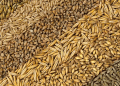
Recent inspections by Rosselkhoznadzor (Russia’s agricultural watchdog) revealed that 36.9 metric tons of contaminated feed barley were shipped from Mordovia to Karelia. The grain, treated with undisclosed pesticides and agrochemicals, lacked proper documentation, leading authorities to void its compliance declaration and issue a formal warning to the supplier.

This incident follows a similar case in which barley from Ulyanovsk—also tainted with unauthorized chemicals—entered Karelia’s feed supply. Such repeated violations underscore systemic risks: unchecked pesticide use in feed crops can accumulate in livestock, threaten food safety, and disrupt trade.

The Bigger Picture: Pesticide Risks in Agriculture

Globally, 24% of animal feed samples tested in 2023 contained pesticide residues above safe limits (*FAO/WHO Joint Report, 2023*). In the EU, 15% of feed imports were rejected last year due to chemical contaminants (EFSA, 2024). Russia’s reliance on domestic feed grains—often produced with heavy agrochemical use—demands tighter traceability, especially as global buyers enforce stricter residue thresholds.

Solutions: Transparency and Technology

  1. Blockchain traceability: Pilot projects in Brazil reduced feed contamination incidents by 30% by digitizing supply chains (AgriTech Journal, 2023).
  2. Rapid testing: Portable spectrometers now detect pesticides in grains within minutes, cutting lab delays (Journal of Agricultural Science, 2024).
  3. Regulatory harmonization: Aligning Russia’s limits with Codex standards could prevent future breaches.

The Karelia incidents are a wake-up call: as pesticide misuse jeopardizes feed safety, the industry must adopt real-time monitoring, stricter audits, and harsher penalties for non-compliance. Farmers and processors investing in clean practices will gain a competitive edge in increasingly regulated markets.


Tags: Agricultural Regulationsagrochemicalscontaminated barleyfeed safetyfood securitylivestock feedPesticide Residuesrapid testingRosselkhoznadzorsupply chain traceability

Tatiana Ivanova

Next Post
Testing Russian-Bred Wheat and Barley Varieties in LPR: Promising Results Under Challenging Conditions

Testing Russian-Bred Wheat and Barley Varieties in LPR: Promising Results Under Challenging Conditions

Newsletter

Oryol Grain Confirmed GMO-Free: A Win for Agricultural Quality

Oryol Grain Confirmed GMO-Free: A Win for Agricultural Quality

14 December 2024

The Unseen Harvest Hazard: Managing the Rising Threat of Corn Stubble Fires

21 October 2025

Sowing Independence: How Kuban Farmers Lead Russia in Rice and Wheat Production with Homegrown Seeds

29 March 2025

Australian Winter Crop Update: Variability and Optimism Amidst Challenging Conditions

26 June 2024

MAPA Releases List of Unsafe Roasted Coffee Brands and Batches

2 July 2024

A Slight Dip with Strategic Depth: Analyzing Kurgan’s Grain and Oilseed Exports to China

3 December 2025

U.S. Wheat Prices Hit Four-Year Low: Analyzing the Global and Domestic Forces at Play

4 August 2024

Grain Quality Crisis in Orenburg: 255 False Declarations Expose Systemic Safety Failures

16 August 2025

Ergot of cereals

17 July 2024

Grasshoppers and Mormon Crickets Threaten Western U.S. Agriculture: A $318 Million Crisis

12 July 2024
  • About
  • Advertise
  • Careers
  • Contact
Call us: +51 93 999 5140

© 2020-2024 Field Crops news

Welcome Back!

Login to your account below

Forgotten Password?

Retrieve your password

Please enter your username or email address to reset your password.

Log In
No Result
View All Result
  • Home
  • News
  • Science
  • Sustainability
  • AgroTech & Innovation
  • Market News
  • Science
  • Research & Development
  • About
  • Contact

© 2020-2024 Field Crops news