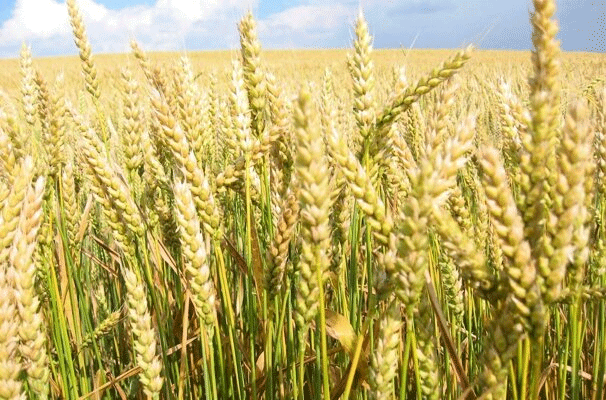
According to a groundbreaking study published in Proceedings of the National Academy of Sciences (PNAS), global wheat yields are 10% lower today than they would have been without climate change. Researchers analyzed 50 years of climate and crop data, revealing alarming trends for wheat, barley, and maize production. While advancements in seeds, fertilizers, and farming technology have boosted yields overall, climate-driven losses are now eroding these gains.
Key Findings from the Study:
- Wheat and barley have suffered 8–14% yield losses due to climate shifts.
- Maize (corn) yields are down 4–8%, with hotter, drier conditions worsening stress.
- Water scarcity is intensifying—vapor pressure deficit (a key drought indicator) has risen in major growing regions, further reducing productivity.
- Extreme weather is accelerating: The UK recorded its driest spring in 70 years in 2023, while China—the world’s top wheat producer—faces worsening droughts.
Why This Matters for Agriculture
The study used climate models to show that a 1°C temperature rise over 50 years can cut yields by 5%. Even with higher CO₂ levels (which can mildly stimulate plant growth), water stress and heat are overwhelming these benefits. Regions like Europe, Russia, and China—critical for global wheat supplies—are at highest risk.
The Path Forward: Adaptation and Innovation
To combat these losses, experts urge:
- Developing climate-resilient crop varieties (e.g., drought-tolerant wheat).
- Precision agriculture (soil moisture sensors, AI-driven irrigation).
- Policy support for farmers transitioning to sustainable practices.
Climate change is no longer a distant threat—it’s already shrinking harvests. Without urgent action, food security and farm incomes will keep declining. By adopting adaptive technologies and policies, the agricultural sector can mitigate these risks and safeguard future yields.
Error