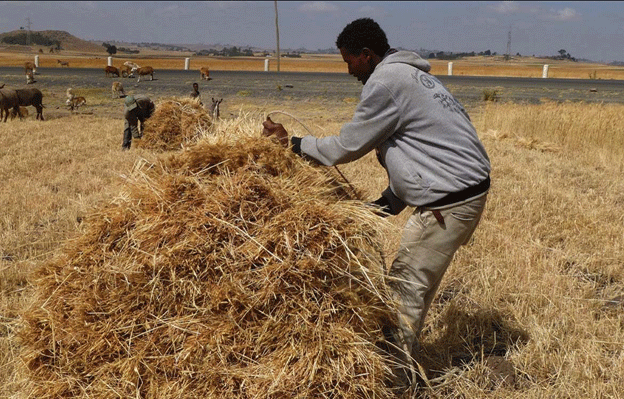
Wheat: The Strategic Grain Feeding the World and Fueling Global Power Plays
Wheat is far more than a crop—it’s a cornerstone of civilization, a driver of global commerce, and a silent force in geopolitical negotiations. As the most consumed cereal by humans, wheat is central to the diets of over 35% of the global population, playing a key role in food systems from Nigeria to China, and from Egypt to France. By contrast, rice ranks second, while maize is primarily used for animal feed.
According to the Food and Agriculture Organization (FAO), wheat occupies 17% of the world’s cultivated land, making it one of the most widely grown crops on the planet. Yet despite this global presence, wheat production is concentrated in a handful of temperate and oceanic climate zones, primarily across two major belts in the Northern Hemisphere: one stretching from the U.S. Midwest to Europe and the Russian steppes, and the other from China to Central Asia.
Few Exporters, Many Dependents
Only a limited number of countries dominate wheat exports: Russia, the European Union, the United States, Canada, Ukraine, and Australia together control more than 85% of global wheat exports. Meanwhile, many countries—especially in the Middle East, North Africa, and Sub-Saharan Africa—are heavily dependent on imports to meet domestic needs.
For example, Egypt, the world’s largest wheat importer, relies on subsidized bread to maintain social peace. Even slight fluctuations in global wheat prices or supply disruptions—like those seen during the Russia–Ukraine conflict—can trigger economic strain or political unrest. In 2022, for instance, the conflict disrupted Ukraine’s Black Sea ports, halting shipments and raising prices globally, forcing many countries to seek alternate sources or reduce wheat-based food subsidies.
Wheat has thus become a tool of influence. Countries like Russia use stable supply and low prices to strengthen ties with key importing nations, while Western powers leverage food aid or trade partnerships as soft power strategies.
Climate Change: A New Threat to Global Wheat Stability
The wheat economy also sits on the frontlines of climate change. Increasingly erratic weather patterns—droughts, heatwaves, and heavy rainfall—threaten yields and shift production zones. In 2023, Canadian wheat yields dropped significantly due to drought, while excessive rain in France downgraded a portion of its soft wheat crop to feed quality.
To remain viable, wheat-producing nations must invest in:
- Drought-resistant and heat-tolerant wheat varieties
- Soil health and water management practices
- Climate-resilient infrastructure, especially in grain logistics and storage
Advanced breeding technologies and global cooperation on crop resilience will be essential to ensure stable supply in the coming decades.
Wheat is not just an agricultural product—it is a global lifeline, a symbol of sovereignty, and a catalyst for peace or conflict. As climate pressures grow and geopolitical tensions persist, the ability to produce, store, and trade wheat safely and sustainably will be key to ensuring global food security. For farmers, researchers, and policymakers alike, wheat remains a strategic crop with far-reaching implications for both fields and foreign affairs.