The 2025 U.S. winter wheat crop has experienced a dramatic shift in conditions within just a month. At the end of October, 62% of the crop was in some form of drought (D1-D4), posing a grim outlook. By the end of November, that figure had dropped to 28%, thanks to significant rainfall across key wheat-producing regions. This recovery has brought renewed optimism to farmers and the broader agricultural community.
Regional Improvements
Moisture conditions in November played a pivotal role in this turnaround:
- Hard Red Winter Wheat Areas: Heavy rains were reported throughout the Texas Panhandle, Oklahoma, western Kansas, and eastern Colorado, regions critical for hard red winter wheat.
- Soft Red Winter Wheat Areas: Southern Illinois, Indiana, and Ohio also experienced beneficial rains, improving conditions for soft red winter wheat sown in those regions.
Historical Context and Data
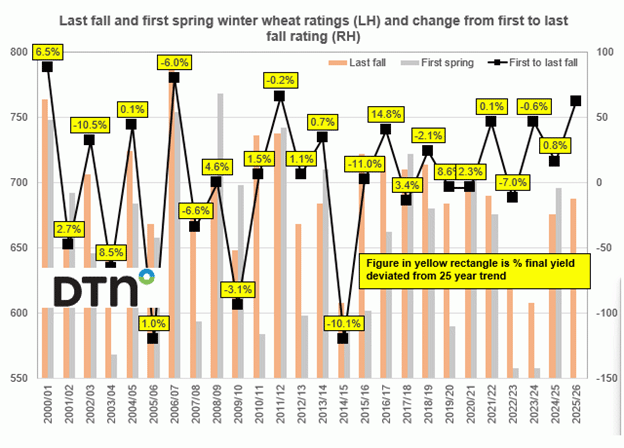
The USDA’s first condition rating for the 2025 winter wheat crop, released at the end of October, stood at 626 on a weighted rating scale. This was the second-worst initial rating since records began in 1986, surpassed only by the 2023 crop’s rating of 562. However, by Thanksgiving, the final fall rating improved to 688, a 62-point increase—the largest improvement since 2010 for the 2011 crop and the fifth-largest since 1988/89.
Notably, in years with similar significant fall improvements, crop conditions often remained favorable through winter, leading to decent ratings in early spring.
Limitations of Early Ratings
Despite the recovery, it is important to note that early ratings (first fall, final fall, and first spring) are not reliable indicators of ultimate yields:
- Correlation with Final Yields:
- First fall ratings: -5.4%
- Final fall ratings: 11.3%
- First spring ratings: 19.2%
This highlights the limited predictive power of these metrics. Instead, growing conditions during May and June, particularly the critical head-filling stage, are far more influential in determining yield outcomes.
Implications for 2025
While the recent recovery is promising, the true test lies ahead. The crop’s fate will hinge on weather patterns during the spring and early summer, when temperature, rainfall, and disease pressures converge to shape final yields. Farmers should remain cautious but optimistic, leveraging the improved conditions to prepare for potential challenges during the growing season.
The 2025 U.S. winter wheat crop’s fortunes have taken a positive turn, thanks to widespread rainfall in November. Although early ratings show limited predictive value, they provide a foundation for hope. Continued favorable conditions and careful management in the critical months ahead will be crucial for realizing the crop’s potential.
Error