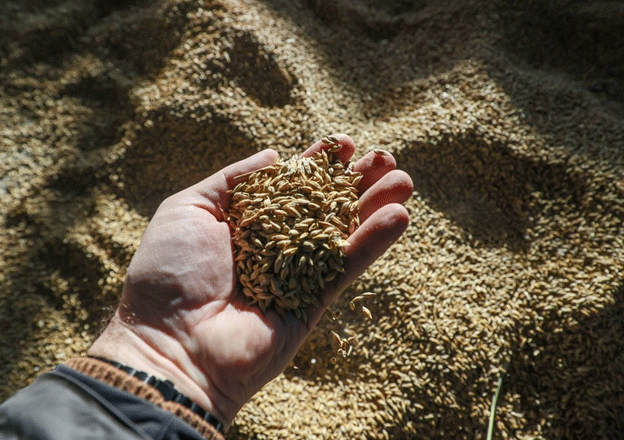
In a groundbreaking discovery, archaeologists excavating the grounds of the Trinity-Sergius Lavra in Sergiev Posad have uncovered the largest collection of ancient grain in Russia. This significant find consists of archaeological grain deposits that span several centuries, with fragments dating back to the 16th century. According to the press service of the Institute of Archaeology of the Russian Academy of Sciences (RAN), the grain accumulation reached an impressive thickness of 40 cm, primarily comprising rye, barley, wheat, oats, and millet.
The total weight of this unique collection exceeds 2.5 tons, making it an invaluable resource for researchers aiming to reconstruct the agricultural practices of the 15th to 18th centuries. The analysis of these grain samples will be conducted by specialists at the N.I. Vavilov All-Russian Institute of Plant Genetic Resources, who will decipher the genomic fragments to determine the origins of the seeds. This analysis will provide crucial insights into whether these grains were cultivated locally or imported from other regions.
Understanding the genetic makeup of these historical crops can illuminate the adaptability of these plants to the specific climate and soil conditions of the Moscow Region. Such findings can enhance our knowledge of the agricultural practices employed during the period, offering a clearer picture of how farmers adapted to their environment and what crops thrived in those conditions.
This discovery aligns with ongoing archaeological efforts across Russia to better understand the country’s agricultural history. Previously, Russian and Turkmen archaeologists unearthed important artifacts at the Gonur-Depe site in the Karakum Desert, including seals that depict celestial bodies, suggesting a rich agricultural and cultural history in the region.
The implications of this archaeological find extend beyond mere historical curiosity; they could have profound effects on contemporary agricultural practices. By studying ancient grains, modern farmers and agronomists might glean insights into traditional cultivation methods that could be adapted to today’s agricultural challenges, such as climate change and soil degradation. Moreover, understanding ancient crop varieties can aid in the development of more resilient and sustainable crops for future generations.
The discovery of the largest ancient grain storage in Russia offers a treasure trove of information regarding historical agriculture in the Moscow Region. As researchers analyze the genetic material of these ancient grains, they may uncover valuable insights that can inform modern agricultural practices and enhance our understanding of the region’s agricultural heritage.
Error