
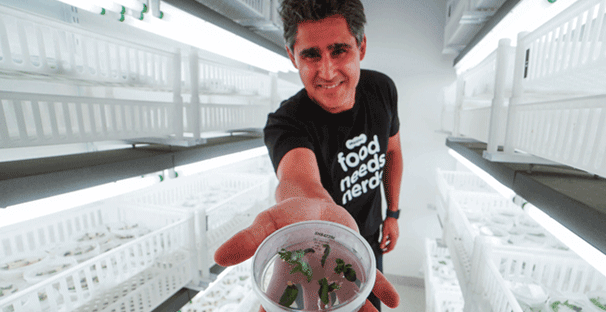
In a significant advancement for agricultural biotechnology, Moolec Science, a Luxembourg-based company specializing in molecular farming, announced this month that it has received approval from the U.S. Department of Agriculture (USDA) for its genetically modified (GM) peas designed to produce bovine myoglobin, a protein that enhances iron content. This development promises to reshape the landscape of plant-based protein sources, presenting new opportunities and challenges for farmers, agronomists, and agricultural engineers.
Overview of Moolec Science’s Innovations
Over the past 18 months, Moolec has successfully navigated the regulatory landscape to secure USDA approvals for several products. This includes its safflower, “GLASO Piggy Sooy,” which boosts gamma-linolenic acid (GLA) content, and “Piggy Sooy,” a soybean engineered to produce porcine protein. These innovations underscore Moolec’s commitment to leveraging biotechnology for sustainable agricultural practices.
Implications of USDA Approval
The USDA’s Animal and Plant Health Inspection Service (APHIS) has determined that Moolec’s GM pea, designated PEEA1, poses no additional pest risk compared to conventional peas. As a result, the import, interstate movement, and environmental release of PEEA1 are not subject to regulation under 7 CFR part 340. This regulatory clearance allows Moolec to expand field trials, scale seed production, and move toward commercialization.
Nutritional Benefits and Market Potential
Moolec’s genetically modified peas have the potential to produce large quantities of myoglobin, making them an excellent source of plant-derived iron. With rising consumer interest in plant-based diets, the global market for plant proteins is expected to grow significantly, reaching $27.4 billion by 2027. Moolec’s innovations could lead to a transformative impact on the $65 billion pea protein market and beyond, addressing nutritional deficiencies while offering sustainable farming solutions.
Future Prospects in Molecular Farming
Molecular farming is an emerging field that presents exciting opportunities for high-value protein production. Moolec is also exploring other avenues, including the development of iron supplements using new yeast strains. The company plans to commercialize PEEA1 by 2028, alongside the continued development of its existing projects.
Moreover, the advancements made by Moolec reflect a broader trend in agricultural innovation. Companies like Kinish are also leveraging molecular agriculture to develop plant-based products, including rice-based ice cream, highlighting the diverse applications of this technology.
The USDA’s approval of Moolec Science’s genetically modified peas represents a pivotal moment in agricultural biotechnology. By harnessing the potential of molecular farming, Moolec is well-positioned to provide sustainable protein sources that meet the evolving demands of consumers. As these innovations unfold, they have the potential to not only reshape the protein market but also enhance farmers’ economic viability and contribute to more sustainable agricultural practices.
Error