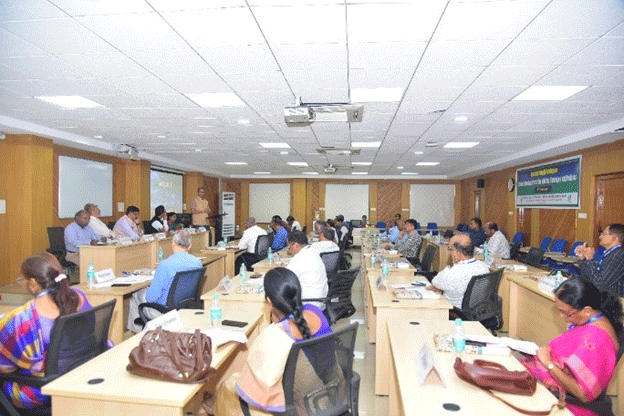
The ICAR-National Academy of Agricultural Research Management (NAARM) in Hyderabad recently organized a significant workshop titled “Sustainable Rice Production: Strategies and Policies” on October 16, 2024. This event brought together 34 participants, including farmers, agronomists, agricultural engineers, and researchers, to discuss crucial strategies for enhancing rice production sustainably.
Addressing Regional Disparities in Rice Production
The workshop’s Chief Guest, Dr. B. Venkateswarlu, former Vice-Chancellor of Vasantrao Naik Marathwada Agricultural University, emphasized the pressing need to rationalize rice cultivation areas across India. He particularly pointed out the potential for improving paddy yields in the low-productive North Eastern states. According to the Food and Agriculture Organization (FAO), these regions hold substantial promise for rice cultivation due to their favorable climatic conditions and abundant water resources, yet they often lag in productivity compared to other rice-growing areas.
The Northeastern states of India, such as Assam and Manipur, have historically faced challenges, including inadequate infrastructure and limited access to modern farming techniques. Recent initiatives aim to address these disparities by providing training and resources, such as the National Food Security Mission (NFSM), which seeks to increase rice production and productivity in these regions.
Modern Tools for Sustainable Rice Production
The workshop also featured insights from Dr. R.M. Sundaram, Director of the ICAR-Indian Institute of Rice Research. He outlined significant advancements in rice research since the Green Revolution, showcasing modern tools and methodologies, including biotechnology and precision agriculture, which can be harnessed for sustainable production.
Research indicates that integrating modern breeding techniques—like marker-assisted selection and genomic technologies—can enhance yield and resilience in rice varieties. For instance, the introduction of drought-tolerant rice varieties has been critical in areas prone to water scarcity, as highlighted in a study by the International Rice Research Institute (IRRI).
The Urgency of Policy Interventions
The workshop’s host, Dr. Ch. Srinivasa Rao, Director of ICAR-NAARM, emphasized the increasing demand for rice due to a growing global population and shifting consumer preferences toward more nutritious options. He stressed the necessity of policy interventions to align agricultural practices with sustainable development goals, particularly concerning resource conservation and climate change adaptation.
The Intergovernmental Panel on Climate Change (IPCC) projects that climate change could reduce global rice yields by 10-30% by 2050, making the development of resilient farming practices imperative. Policymakers must focus on supporting research and development, enhancing farmer education, and facilitating access to sustainable agricultural practices to mitigate these risks.
The National Workshop on Sustainable Rice Production highlighted the collective efforts needed to navigate the complexities of modern rice farming in India. By focusing on regional productivity disparities, embracing modern agricultural technologies, and advocating for supportive policies, stakeholders can work toward a sustainable future for rice production that meets the challenges of climate change and population growth. As rice continues to be a staple food for billions, the importance of sustainable practices in its production cannot be overstated.
Error