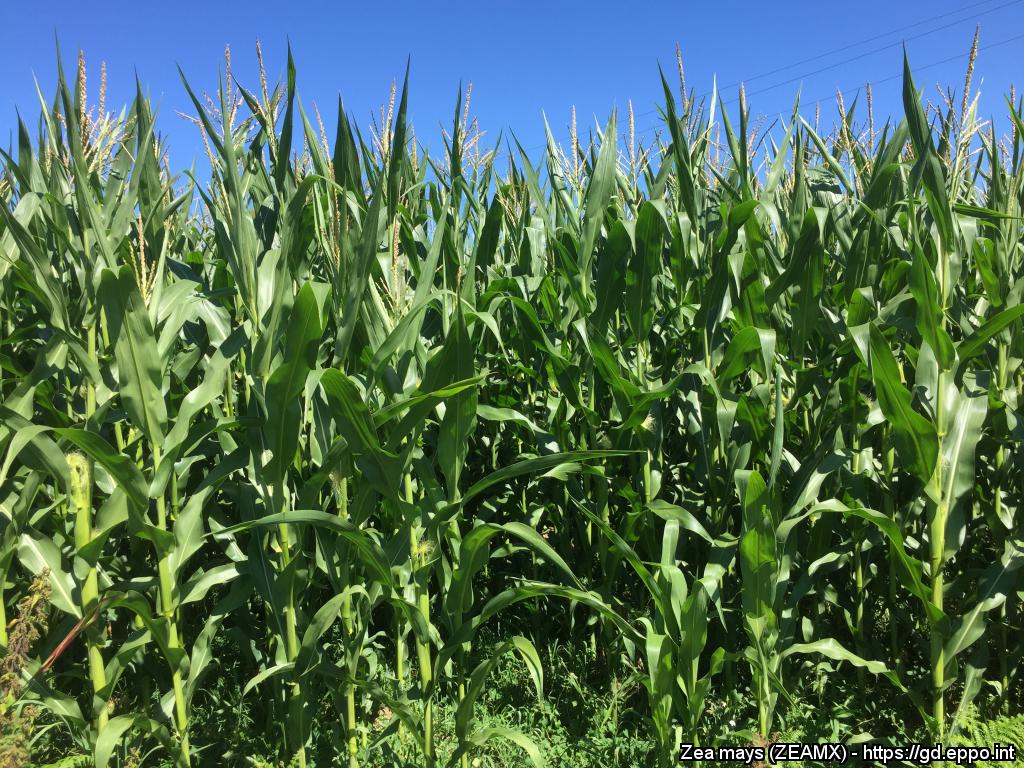
Zea mays (maize) is a globally significant cereal crop with diverse applications in food, feed, and industrial products. However, maize cultivation is often challenged by environmental stressors such as heavy metal toxicity and drought stress (DS). Heavy metals like cadmium (Cd) and lead (Pb) can accumulate in soil through industrial activities and improper waste disposal, posing significant threats to plant growth and development. Drought stress further exacerbates these challenges by limiting water availability and affecting physiological processes in plants. This study explores the impact of Cd and Pb toxicity, as well as DS, on maize growth and development, and investigates the potential mitigating effects of various treatments, including gibberellic acid (GA3), biochar (BC), rhizobacteria (RB), and their combinations.
The experiment involved maize plants subjected to different stress conditions: cadmium (Cd) at concentrations of 0, 6, and 12 ppm, lead (Pb) at 0 and 400 ppm, and drought stress (DS). Treatments included the application of 10 ppm GA3, 0.75% BC, a combined treatment of 10 ppm GA3 and 0.75% BC, rhizobacteria (RB), and a combined treatment of 0.5% BC and RB. The study measured germination rates, shoot and root lengths, and biochemical parameters such as shoot and root protein, phenolics, and chlorophyll contents under these conditions.
In the absence of Cd stress (0 Cd), the application of 10 ppm GA3 and 0.75% BC significantly enhanced germination rates by 72% and 76%, respectively, compared to the control, with the combined treatment exhibiting the highest enhancement of 86%. Under Cd stress (6 ppm Cd), GA3 and BC individually improved germination by 54% and 57%, respectively, with the combined treatment showing the largest increase of 63%. Drought stress influenced germination, with notable improvements observed with the application of 0.5% BC (50% increase) and RB (49% increase). Similar trends were observed in shoot and root lengths, where the combined treatment of GA3 and BC resulted in the most significant improvements. The treatments positively influenced shoot and root protein, phenolics, and chlorophyll contents, particularly under stress conditions.
These findings highlight the potential of combined treatments, such as the application of GA3 and BC or BC with RB, in alleviating the adverse effects of heavy metals (Cd and Pb) and drought stress in maize cultivation. The combined treatments not only improved germination rates but also significantly enhanced shoot and root growth, as well as important biochemical parameters under stress conditions. This suggests that GA3 and BC, alone or in combination with RB, can play a crucial role in enhancing maize resilience to environmental stressors. The study highlights the importance of exploring sustainable agricultural practices to mitigate the impacts of heavy metal toxicity and drought stress. Future research should focus on long-term field trials to validate these findings and further investigate the mechanistic pathways involved in stress mitigation by these amendments, as well as their economic feasibility and environmental impact on a larger scale to ensure their practical applicability in real-world agricultural settings.
Photo: EPPO (2024) EPPO Global Database. https://gd.eppo.int
Reference: https://www.frontiersin.org/journals/plant-science/articles/10.3389/fpls.2024.1396594/full
Error